The apartment price increased by 18.4%. The investor earned a 42% return on invested capital. This is not a typo or best-case marketing math. This is a real transaction that we at VINPROP accompanied from market selection to fixing the result.
The difference between an 18.4% price increase and a 42% return on capital lies in how the strategy is designed. In this article, we will break down the mechanics in detail: why structural growth in Vietnam is sustainable, how to select a market and project, how installment plans amplify returns—and where the real risks lie.
What Is a Structural Growth Strategy?
In VINPROP's investment practice, there are five strategies. The first—structural growth—is the most straightforward and reproducible. Its core concept: entering a market where housing demand is driven not by buyer sentiment, but by objective economic processes.
Structural growth occurs when behind real estate price growth stands a tangible chain:
FDI → Jobs → Income → Mortgage Potential → End-User Demand → Price Growth
Foreign direct investment flows into an industrial park. Jobs emerge—first manufacturing, then managerial, service, and infrastructural. Employment drives income growth. Rising incomes build the population's mortgage potential. Mortgage potential converts into effective housing demand. Demand, coupled with a supply shortage, pushes prices upward.
This mechanism works not because someone invented it, but because this is precisely how urbanization functions—in Vietnam, just as anywhere else where the economy transitions from an agrarian to an industrial structure.
Vietnam is currently at this exact juncture. The difference compared to other markets lies in scale and speed: the country is absorbing manufacturing relocating from China, and doing so rapidly.
Why Binh Duong: The Market Selection Logic

The main mistake when investing in overseas real estate is looking at the apartment before analyzing the market. The apartment is the final step. First, one must answer the question: where in the structural growth chain is this location right now?
When we at VINPROP evaluated Binh Duong, the picture was as follows:
Industrial Base. Over 4,000 foreign investment projects. Accumulated FDI volume—exceeding $40 billion. Companies like Samsung, LEGO, Procter & Gamble, and Bosch have set up manufacturing operations here. The VSIP-1, VSIP-2, and Song Than industrial parks create a concentration of employment that is hard to replicate artificially.
Migration Flow. Binh Duong is the #1 province in Vietnam for internal migration. People move where there are jobs. This is not a forecast—it is statistical data verifiable via census records. Migration creates sustained housing demand that does not depend on investor sentiment.
Income. In terms of per capita GDP, Binh Duong ranks first among Vietnam's provinces. This is key: the affluent end buyer is not an abstraction, but a specific manager at an international company or a skilled technical specialist whose income allows them to service a mortgage.
Infrastructure Development. Ring Road 3, which will connect Binh Duong to Ho Chi Minh City, is under active construction. Ring Road 4 is being planned. Simultaneously, discussions are underway regarding extending the metro line northwards from Thao Dien.
All of these represent connectivity infrastructure. And connectivity, as established, triggers the next cycle in the chain: mobility, demand, liquidity, and revaluation.
When we entered Binh Duong's first projects, the market had not yet "revalued" the territory. The price per square meter was several times lower than a comparable product in Ho Chi Minh City. This exact discrepancy—the gap between fundamental value and market price—creates the investment opportunity.
How to Select a Project: Three Filters
Having identified the area, it is essential not to make the next mistake: selecting a project based solely on renderings and map location.
We apply three filters.
First: Entry price relative to the market. The entry price must be below the market level of similar products in more mature locations. This constitutes the investment potential—not a promise of growth, but an existing gap that the market will close as the area matures.
When analyzing The Felix in Thuan An, the price was around 40 million VND per square meter. A comparable product in Ho Chi Minh City cost several times more. This gap needed justification—and it had one: Binh Duong had not yet passed its revaluation threshold.
Second: Track record of the developer and similar projects. Promotional promises are marketing. Track record is data. We wanted to know: were there projects in the same location by the same or comparable developers that appreciated between the sales launch and completion? The Emerald Golf View project in Binh Duong demonstrated over 50% growth over five years—this is a verifiable fact, not a projection.
Third: Product type and demand structure. We seek products purchased for living—not just by investors seeking resale. When the majority of buyers are end users, the asset remains resilient during market slowdowns: if the market temporarily cools down, people simply live in the apartment and wait it out.
How to Select an Apartment Within a Project
Choosing a specific unit is a distinct level of analysis that most investors underestimate. The question is not "what do I like?", but "who will be the easiest buyer to sell this apartment to in two to three years?"
Several principles we apply:
Scarcity of format. If a project has 1,200 apartments, of which 15% are 1-bedroom and 70% are 2-bedroom, the 1-bedroom unit is in short supply. A scarce format is more liquid upon exit. A buyer looking specifically for this unit type chooses from a limited pool of options—meaning less competition when selling.
Layout location. Units near elevator lobbies are noisier and harder to resell. Corner and end units feature additional windows and better ventilation, making them perceived as higher value. All else being equal, a corner unit sells faster and at a premium.
View characteristics. Views of green spaces, water bodies, or panoramic city skylines are not about aesthetics; they drive liquidity. An end-user buyer is willing to pay extra for a view because they will live there.
Floor level. Units on overly low floors are harder to sell in any market condition—more noise, less light, and reduced privacy. Mid-to-high floors with good views offer the optimal balance of price and liquidity.
At The Felix, we selected 1-bedroom apartments on mid-floors facing green space—specifically because this layout would face minimal direct competition when resold.
How Installment Plans Turn 18% into 42%: Yield Mechanics
This is the most critical component of the strategy—and one often misunderstood even by experienced investors.
The Vietnamese primary market operates on installment plans. The developer collects funds in stages throughout construction: 10–15% at the start, followed by several tranches of 5–10%, with the bulk due closer to completion.
What does this mean for the investor?
Suppose an apartment costs $100,000. The developer schedules payments: 10% → 5% → 5% → 10% → 20% prior to handover, then 50% upon receiving the keys. Prior to handover, the investor has injected $50,000—half of the total cost.
During the construction period (two to three years), the apartment's market price rose by $18,400—an 18.4% increase.
However, ROI is calculated on actual capital deployed, not on total property value. An $18,400 profit on $44,000 of invested capital (factoring in payment tranches and time value) yields a 42% return.
This is precisely what happened with The Felix. The asset value rose by 18.4%. The ROI on invested capital reached 42%.
The flip side of this leverage: if the market does not grow but declines, losses are also calculated relative to capital deployed, not total value. Installments magnify movement in both directions. This is not magic; it is financial leverage, and it must be approached with realistic expectations.
Case Study: The Felix, Binh Duong

Let us analyze a concrete transaction from start to finish.
Market Selection
We evaluated Binh Duong at a time when the province was already the country's largest industrial cluster, but its residential market did not yet reflect this in property prices. The mismatch between fundamental metrics (employment, income, migration) and market pricing is a classic sign of an undervalued area.
Project Selection
The Felix—two 40-story towers, 1,200+ units, developed by C-Holdings. Location: Thuan An, adjacent to the Ho Chi Minh City border.
Key parameters at launch:
- Price: 40.8 million VND per sq. m (~$1,700)
- Payment structure: Staged installment plan until completion in Q4 2027
- Local benchmark: Emerald Golf View demonstrated 50%+ appreciation over five years
Apartment Selection
1-bedroom units made up roughly 15% of total supply—a scarce layout format. The selection landed on a unit positioned away from the elevator bank, overlooking a green zone on a mid-level floor.
What Happened in Six Months
Six months post-launch, construction reached the 14th floor. The price per square meter increased from 40.8 to 48.3 million VND—an 18.4% rise over the launch price.
For an investor who entered at launch and made the initial tranche payments, the ROI on invested capital reached 42%. On an annualized basis, this translated to over 80% per annum.
Risks Accepted at Entry
It is crucial to note that this was not a story where "everything went perfectly." Upon entry, we identified specific risk factors:
Developer Risk. C-Holdings is a regional developer rather than a major international builder. While reputational risks are lower, the track record of completed projects is also shorter.
Construction Stage Risk. We purchased at the foundation stage—offering maximum return potential, alongside maximum risk of delays or specification changes.
Liquidity Risk. Binh Duong's primary market is active, but not as liquid as Ho Chi Minh City. Exiting swiftly if required is more challenging.
Market Risk. If the market turns downward, installment plans amplify losses just as they amplify gains.
These risks did not disappear. We simply accepted them consciously—and incorporated them into the timeframe and exit strategy.
Exit Strategy
Our Recommendation: Hold until Q3–Q4 2027, closer to handover—when asset value nears its peak and developer completion risks are largely resolved. Selling shortly before key handover to an end-user buyer represents the optimal scenario.
Alternative: Take delivery, lease out (Binh Duong has strong rental demand from expats and industrial park managers), and wait another one to two years for a higher exit valuation.
Where to Find Such Opportunities Today
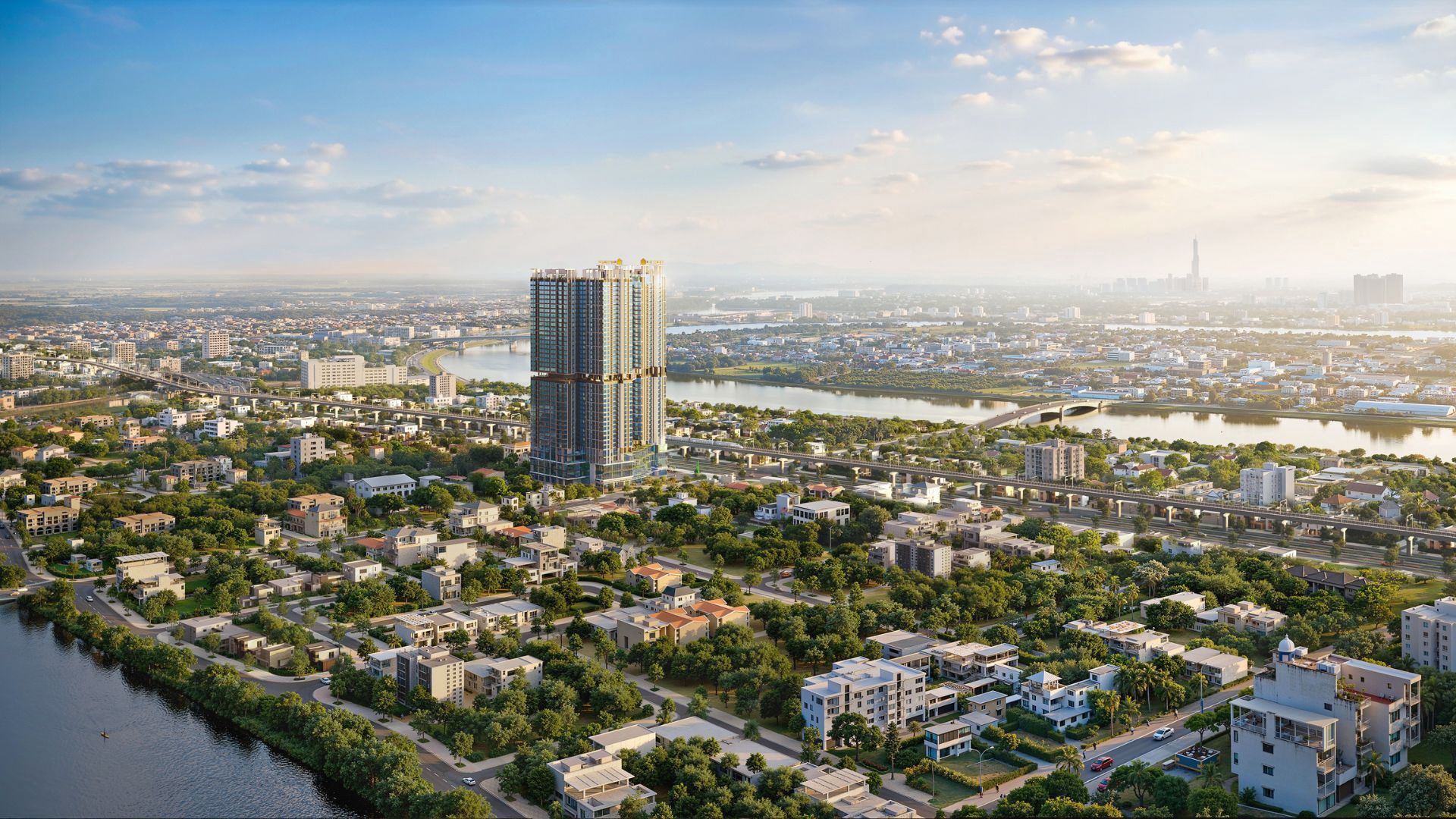
The structural growth strategy applies beyond Binh Duong. Its logic is universal: identify an area where industrial and infrastructure momentum is evident, but where the residential housing market has not yet caught up to fundamental indicators.
In 2025–2026, several corridors in the Ho Chi Minh City metropolitan area display characteristics similar to what was observed in Binh Duong several years ago. The Northern Corridor along the QL13 highway axis is one example: here, two economies are integrating—Binh Duong's industrial base and Ho Chi Minh City's service infrastructure—while housing prices remain noticeably lower than in more mature districts.
The primary real estate market in these areas offers entry prices for 2-bedroom units in the $100,000–$120,000 range. This is comparable to entry levels at The Felix prior to its revaluation.
Key indicators evaluated:
- Price-to-income ratio of employed workers within a 10 km radius
- Presence of confirmed (non-conceptual) infrastructure projects
- Track record of comparable developments by the same or similar developers in the area
- Proportion of end users vs. investors in the initial sales structure
Every parameter is verified through hard data rather than promotional materials.
Strategy Risks: An Honest Breakdown
No investment strategy functions without risk. The structural growth strategy is no exception.
Pace of Capitalization. The market may move slower than benchmarks suggest. If an expected 18–20% growth over two years stretches over four, annual returns decline significantly. Investment horizons must be planned with a buffer.
Competitive Supply Pipeline. Industrial corridors attract developers alongside investors. If substantial new inventory launches simultaneously in an area, resale competition increases. Analyzing pipeline supply volume is essential.
Developer Risk. In the primary market, the key risk lies with the developer rather than market conditions. Delivery delays, product alteration, or financing issues directly impact outcomes. Major international developers face reputational risks that drive compliance. Working with regional builders carries higher potential returns alongside higher risk.
Market Cycles. Vietnam's real estate market is connected to global economic cycles. Monetary policy tightening, geopolitical shifts, or regulatory changes for foreign investors lie beyond individual transaction analysis, but must be monitored when constructing a portfolio.
Liquidity on Distressed Exit. If a quick liquidation is needed, sale prices will fall below market value. Investing in Vietnam's primary market requires a minimum horizon of two to three years. Entry should only occur with capital that will not be required sooner.
If This Strategy Resonates With You
The structural growth strategy is the most reproducible among the five models we employ. It can be applied systematically: select a location based on objective metrics, a project based on history and specifications, and a unit based on investment logic.
We have active properties in our pipeline matching this strategy. To analyze a specific opportunity, book a consultation with us. We will walk through the entire chain: market analysis, project assessment, financial modeling, risk evaluation, and exit strategy.