Purchasing real estate in Vietnam through installment plans is available to both citizens and foreign nationals. It is typically arranged directly with the developer during the construction phase (off-plan) and is divided into milestones leading up to property handover, spanning from 1 to 3 years with zero interest.
Because mortgages in Vietnam remain largely inaccessible to foreign buyers in practice, developer installment plans are in exceptionally high demand.
The local real estate market offers one of the most diverse and flexible payment schedule systems in Asia. Foreign buyers can choose from several structured payment models, each tailored to different investment goals.
Understanding these schedules is essential because:
- Discounts can reach up to 12%.
- The payment structure significantly impacts ROI.
- Some programs include bonuses for early payment.
- Certain options are more advantageous for foreigners.
In this article, we will thoroughly analyze each payment model, the mechanics of financial leverage, and the fundamental settlement rules when purchasing off-plan property in Vietnam.
4 Main Payment Schedule Models
Construction-Linked Payment Schedule
(Thanh toán theo tiến độ xây dựng)
This is the traditional Vietnamese payment structure used by the majority of developers.
Payments are tied directly to construction progress.
Typical Structure
| Construction Stage / Event | Percentage of Price |
|---|---|
| Signing the SPA | 10% |
| Foundation completion | 10% |
| 5th floor construction | 10% |
| 10th floor construction | 10% |
| Building frame completion | 10% |
| Block construction completion | 25% |
| Key handover | 5% |
| Issuance of the Pink Book (sometimes paid later) | 5% |
Pros: High security (you only pay for what has already been built).
Cons: Minimal discounts (0–3%), timelines depend on the speed of construction.
Best for: First-time buyers in Vietnam or those who want to see progress on the construction site before parting with their money.
Date-Linked Payment Schedule
(Thanh toán theo thời gian cố định)
Payments are made on fixed calendar dates, regardless of construction progress.
Example
| Stage / Payment Deadline | Percentage of Price |
|---|---|
| Signing the SPA | 10% |
| In 3 months | 15% |
| In 6 months | 10% |
| In 9 months | 10% |
| In 12 months | 10% |
| In 15 months | 10% |
| Key handover | 30% |
Pros: You know in advance when and how much you need to pay. Plus, developers often offer discounts (3–5%).
Cons: You must pay according to schedule, even if construction suddenly slows down.
Best for: Those who need a clear payment plan independent of the developer's operational pace.
Low Monthly Payment + Balloon Payment at Handover
(Thanh toán hàng tháng + một khoản lớn khi bàn giao)
Increasingly popular among foreign buyers. This model reduces financial pressure during the construction phase.
Structure
| Stage / Payment Type | Percentage of Price |
|---|---|
| Monthly payments | 1–3% per month |
| Balloon payment at handover | 40–50% |
Pros: Monthly payments do not strain your budget during construction.
Cons: Almost no discounts (0–2%), and you must be prepared for a large lump sum at the end.
Best for: Those who do not have the full amount right now, but know that funds will become available by the time the property is completed (e.g., from selling another asset or annual bonuses).
Early Large Payment Plans (50–70–95%)
(Thanh toán nhanh – nhận ưu đãi lớn)
This program offers the maximum discount.
Options
| Advance Payment Amount | Discount Amount |
|---|---|
| 50% advance | 5–7% |
| 70% advance | 7–10% |
| 95% advance | 10–12% (sometimes more) |
Pros: Maximum discounts and the lowest price per square meter.
Cons: You need to have the full amount upfront; there is higher risk if the project is still at the excavation stage.
Best for: Investors with substantial free capital aiming to resell the property upon key handover.
Summary Table: Payment Schedule Comparison
| Payment Plan | Risk | Liquidity | Discount | Best For |
|---|---|---|---|---|
| Construction-Linked | Low | Moderate | 0–3% | Beginners, cautious buyers |
| Date-Linked | Moderate | Moderate | 3–5% | Investors with predictable income |
| Low Monthly + Balloon | Moderate | Low at start | 0–2% | Those seeking flexibility |
| Accelerated Advance | High | High | 5–12% | Professional investors |
Choosing the Right Payment Plan
When selecting a payment scheme, foreign buyers should base their decision on two key factors:
1. Liquidity and Cash Flow Stability:
Stable income → Date-linked schedule
Unpredictable income → Low monthly payment plan
Substantial savings → Early advance payment plans (50–95%)
2. Your Investment Strategy:
Long-term ownership for personal use → Construction-linked schedule
Quick resale → Accelerated advance payment (70–95%)
Rental yield → Depends on key handover timelines and project commissioning
Upon successful key handover, the foreign buyer becomes the full owner and assumes responsibility for ongoing maintenance (e.g., management fees) and financial obligations.
Payment Structure for Completed Properties
Completed properties (primary developer inventory or secondary market) follow a different rule:
Developer Inventory
The buyer makes a 95% advance payment and receives the keys immediately.
Secondary Market
- SPA transfer (assignment) → usually 95–100%
- Pink Book handover → on the same day as notarization (the buyer pays the seller in full)
Financial Leverage: How Installment Plans Increase ROI (The Felix Case Study)
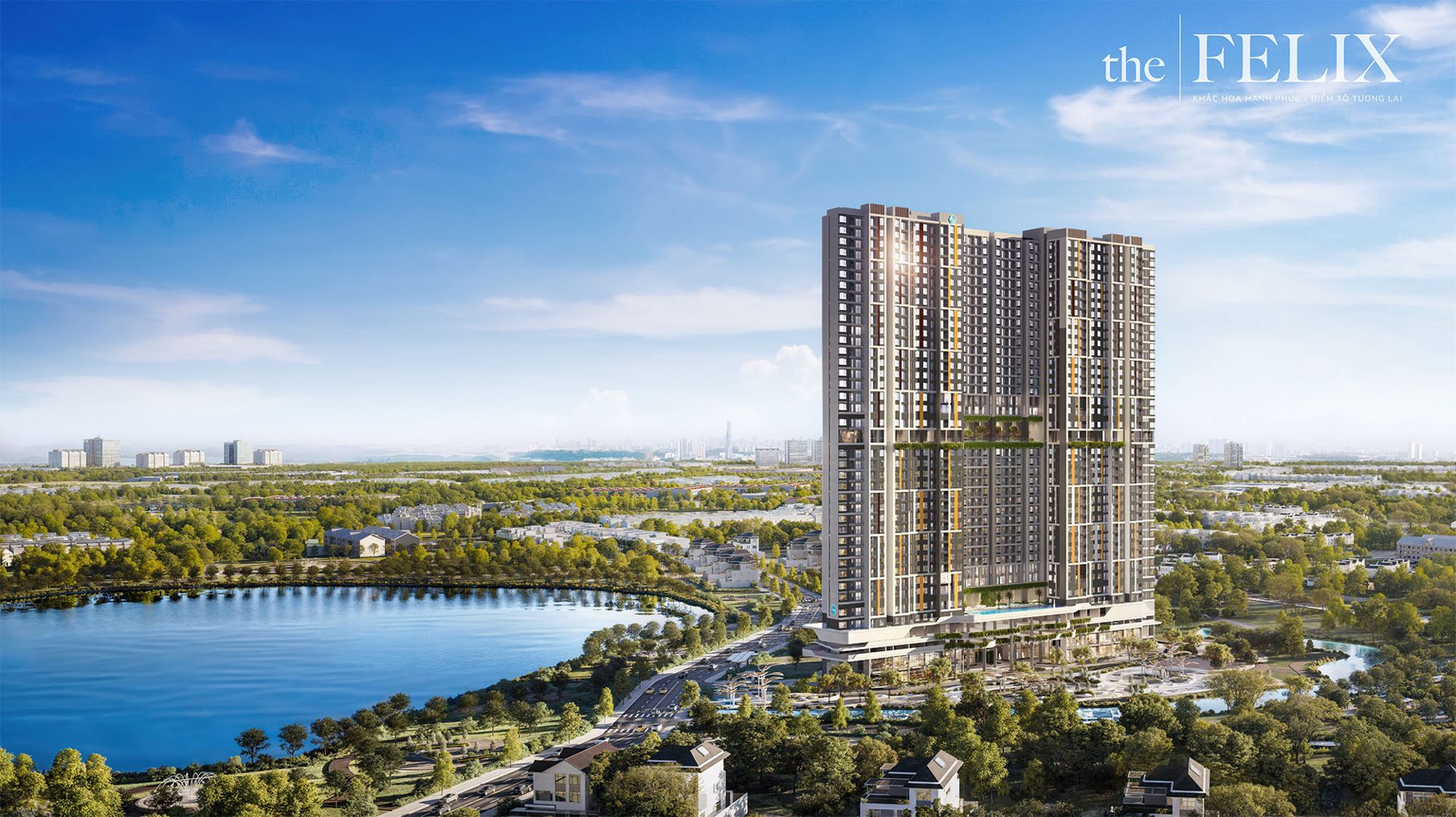 In Vietnam, installment plans act as financial leverage. Returns are calculated not on the total price of the apartment, but on the capital you have actually invested.
A real-life example from our team:
In July 2025, our client invested in The Felix project (Binh Duong). Over 6 months, the market value of comparable apartments increased by approximately 18.4%.
Since payments were made in installments, at the time of the revaluation, the investor had only paid about half of the apartment's value. The price appreciation was divided not by the full price of the property, but by the actually invested capital. As a result, the return on invested capital (ROI) reached 42%. The installment plan simply amplified the outcome.
A detailed analysis of this case study can be found in the article "Structural Growth Strategy: How Vietnam's Industrial Corridors Generate Investor Returns".
A smart choice of installment schedule, combined with professional support at every stage, minimizes risks and increases the potential investment return in Vietnam's growing real estate market.
How VINPROP Helps with Real Estate Purchases
Investment Consulting and Transaction Support
We select properties to match your budget and investment goals, compare projects and installment terms, calculate potential yields, and accompany the transaction from reservation to formalization.
We review the project's legal documents and contract terms, analyze developer obligations, buyer rights, and potential transaction risks.
We handle post-handover ownership matters: monitoring property conditions, liaising with the management company, and organizing routine maintenance.
We help prepare your apartment for living or renting out — from selecting furniture and appliances to fully outfitting the property.
FAQ
How much does an apartment cost in Vietnam?
The price of an apartment in Vietnam depends on the property class, location, and construction stage. On the primary market in developing and resort locations (e.g., Binh Duong or suburban districts), prices start at 1.5–2 billion VND (approx. 60,000–80,000 USD). In major cities (Ho Chi Minh City, Hanoi) for comfort and business-class segments, prices start at 3,000 USD per sq. m and up, while premium properties can cost significantly more.
What are the benefits of buying real estate in Vietnam?
For foreign investors, purchasing real estate in Vietnam is primarily an opportunity to preserve and grow capital, achieve high returns from resale in a growing market, or secure stable passive rental income.
When buying residential real estate, the transaction is formalized via a Sale and Purchase Agreement (SPA) with subsequent acquisition of a Pink Book (ownership certificate) within statutory quotas (up to 30% in condominium blocks).
It is important to note that owning property in Vietnam does not automatically grant the right to obtain a residency permit (TRC) or citizenship.
Can I pay installments in cash US dollars or Euros?
No. According to Vietnamese law, all settlements with developers must be conducted strictly via bank transfer and exclusively in Vietnamese Dong (VND).
Can foreigners get a mortgage in Vietnam?
Starting in 2025, the new Housing Law in Vietnam formally allowed foreigners to apply for mortgages, but in practice, obtaining such a loan remains extremely difficult for non-residents. Local banks require official employment in Vietnam, a Work Permit, a Temporary Residence Card (TRC), and a stable, verifiable local income.
For this reason, the vast majority of foreign buyers and investors utilize interest-free installment plans offered by developers.