Ho Chi Minh City is the largest market for residential real estate in Vietnam. It accounts for about 48% of all residential transaction volume in the country. This is no coincidence: the city concentrates business activity, international capital, an expat population, and the largest layer of affluent Vietnamese buyers.
However, for an investor looking at this market for the first time, Ho Chi Minh City can easily seem like a monolith. In reality, it is structured fundamentally differently.
In 2025, the Ho Chi Minh City market is not a single market. It is a system of sub-markets with different pricing logic, different buyer profiles, and different growth drivers. The central Thu Thiem area and the eastern Thu Duc corridor are in different investment phases. Premium addresses along the Saigon River and new neighborhoods along the future Ring Road 4 are fundamentally different instruments with different horizons.
This material will help you understand the city's logic — by zones, strategies, and specific addresses.
Why Ho Chi Minh City is a Separate Conversation
Among all Vietnamese markets, Ho Chi Minh City stands out not only for its size, but also for its structure.
Administrative Reform. In 2025, the city's administrative borders were expanded to include neighboring provinces into a single metropolitan system. The GRDP of the agglomeration grew from $71 to $114 billion. Foreign direct investment rose from $3 to $6.5 billion. Ho Chi Minh City ceased to be just an individual city — it became a regional economic core of Southeast Asia.
International Financial Center. An IFC is officially being created in the Thu Thiem district with the participation of international organizations, including Nasdaq. This is the first project of its kind in Vietnam — and it changes the nature of commercial real estate demand in the city.
Infrastructure Supercycle. Metro Lines 1 and 2, Ring Roads 3 and 4, Long Thanh International Airport — all of this forms a new transport network that literally redefines which areas are "close" and which are "far". The completion of major construction projects is scheduled for 2028–2030.
Two-Sided Liquidity. Ho Chi Minh City is the only Vietnamese market with sustainable buyer demand from both affluent locals and foreign investors (Korean, Singaporean, Hong Kong, Japanese). This defines exit liquidity — a crucial parameter for an investor.
Market Map: Three Zones with Different Logics
The Ho Chi Minh City market can be conveniently divided into three investment belts — functional rather than administrative.
Zone 1 — Central Core
Districts 1, 3, Thu Thiem (District 2 / Thu Duc). The historical business center plus the new financial district.
Logic: Scarcity. There is virtually no land for new development here. Supply is limited, while demand is formed by a high-income audience for whom the address is part of their status.
Price Range: $7,000–$13,000/m² and higher in new phases of Thu Thiem.
Who It Suits: Investors with a 7–15 year horizon focused on a combination of rental income from corporate tenants and long-term capital appreciation. Strategy — Capital Concentration.
Zone 2 — Infrastructure Corridors
Eastern Corridor (Thu Duc City), the area along Metro Line 2, the near zone of Ring Road 4.
Logic: Revaluation following infrastructure development. Districts currently perceived as "far from the center" will become transport-integrated in 2028–2030. Entry prior to infrastructure completion represents a classic investment opportunity.
Price Range: $2,500–$5,500/m² depending on the specific location and format.
Who It Suits: Investors with a 5–8 year horizon seeking asset value appreciation. Strategies — Urban Cluster Capitalization and Lifestyle.
Zone 3 — Metropolitan Belt
Binh Duong Province, Ba Ria–Vung Tau, far periphery.
Logic: Affordability and volume. The lowest entry prices, a wide buyer pool, and active construction. However, significantly lower secondary market liquidity and weaker price discovery.
Price Range: $1,200–$2,500/m².
Who It Suits: Investors with a high tolerance for uncertainty, a long horizon, and willingness to accept limited liquidity upon exit.
Key Districts: Location Breakdown
Thu Thiem
The most discussed location in Ho Chi Minh City in recent years. An area of about 700 hectares opposite District 1, separated by the Saigon River.
Historically perceived as a wasteland. Today, offices of Shinhan Bank and OCB operate here, the International Financial Center is under construction, and the Ba Son Bridge has opened, making Thu Thiem a direct extension of the city's business center.
Primary Market Price Growth: From ~$5,000/m² in 2017 to $10,000–$13,000/m² in 2025. The foreign quota in most projects has long been exhausted.
Outlook: The creation of the IFC and the relocation of administrative structures will trigger the next wave of revaluation. This is a scenario for the next 7–10 years, not a story of "too late to enter".
Eastern Corridor — Thu Duc
An administratively unified area comprising former Districts 2, 9, and Binh Thanh. The largest urban administrative unit by area.
Several new-generation megaprojects are concentrated here — integrated neighborhoods with their own commercial infrastructure, parks, and educational facilities. Metro Line 1 is already operating along the main corridor. Metro Line 2 and Ring Road 4 will provide additional connectivity by 2028–2030.
Long Thanh Airport is located to the east of Thu Duc. Once opened, it will serve as an additional economic anchor for the entire area.
Price Range: $2,500–$5,000/m².
Tenant Profile — specialists from Vietnamese IT companies, young families, and digital nomads.
District 7 / Phú Mỹ Hưng
An established expat neighborhood. Historically, it was the city's first master-planned modern district, developed with the participation of Taiwanese capital.
The environment is fully formed: international schools, restaurants, a shopping street, and parks. A stable, long-term rental market dominated by Korean, Japanese, and Taiwanese expats.
Price Range: $3,000–$5,500/m².
Rental Yield: 3.5–5% per annum depending on the format and management.
Key Feature: A mature market with predictable liquidity and limited capital appreciation potential. A good option for investors who prioritize rental income stability over maximum asset revaluation.
District 1 / Bến Nghé
Historical center. Ultra-premium segment with extremely limited supply. Most properties here are old building stock or boutique projects with very few units.
For Foreign Investors: High entry threshold ($10,000+/m²), limited foreign quota, but maximum liquidity on the secondary market — historically the most liquid address in the city.
Five Strategies: How They Work in Ho Chi Minh City
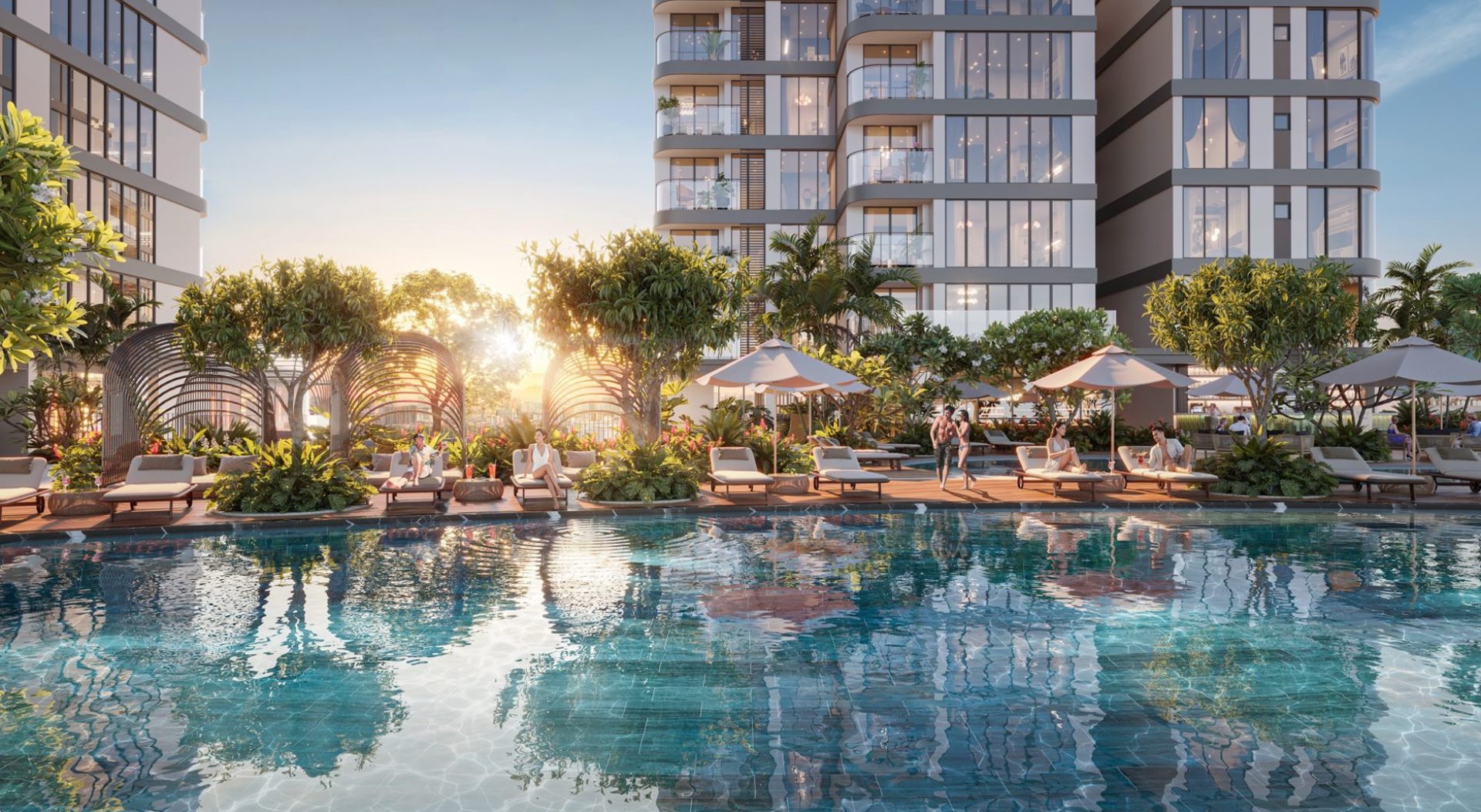
Each of the five VINPROP investment strategies finds specific application in Ho Chi Minh City.
Structural Growth Strategy — betting on industrial corridors around the city. Binh Duong, VSIP, areas along new ring roads. Audience — workers and specialists of the growing industrial sector. Yields are generated through rent from stable local demand.
→ Read more about the Structural Growth Strategy.
Urban Cluster Capitalization Strategy — betting on integrated megaprojects in the eastern corridor. New neighborhoods with their own infrastructure that evolve from construction sites into self-sustaining urban ecosystems.
→ Read more about the Urban Cluster Capitalization Strategy.
Lifestyle Strategy — betting on the quality of the urban environment. In Ho Chi Minh City, this mainly refers to the eastern corridor and new districts of Thu Duc: an environment for professionals choosing a place to live.
→ Read more about the Lifestyle Strategy.
Capital Concentration Strategy — Thu Thiem. The new business center, IFC, administrative concentration. Maximum capital appreciation potential over a 7–15 year horizon, highest entry barrier.
→ Read more about the Capital Concentration Strategy.
Hospitality Shortage Strategy — not a core strategy in Ho Chi Minh City. The city is a commercial hub, not a resort destination. This strategy works in Phu Quoc and other resort locations.
→ Read more about the Hospitality Shortage Strategy.
Market in Numbers: 2025
| Indicator | Value |
|---|---|
| Share in Vietnam's residential market | ~48% |
| New supply 2025 | 7,084 units (+40% YoY) |
| Absorption rate | 73% |
| Average primary price, Q4 2025 | 92 million VND/m² (~$3,600/m²) |
| 2026 Pipeline | ~34,000 units |
| 2026–2027 Forecast | 27,000–30,000 units/year |
| Price gap: core vs. satellites | ~2x |
Infrastructure Schedule:
| Project | Timeline |
|---|---|
| Metro Line 1 | Operational |
| Ring Road 3 | Operational |
| Ring Road 4 | 2028 |
| Metro Line 2 | 2030 |
| Long Thanh Airport (Phase 1) | 2026–2027 |
→ Detailed analytical review of the market: Ho Chi Minh City Real Estate Market 2025: Analytics
If You Are Considering Ho Chi Minh City
Ho Chi Minh City is a market with a wide range of opportunities: from conservative rental properties in mature expat areas to long-term bets on Thu Thiem. The right strategy depends on your horizon, budget, and risk tolerance.
During a consultation, we analyze your specific situation: which strategy fits your goals, which properties match the strategy, and what to verify before signing.
FAQ
Can a foreigner buy an apartment in Ho Chi Minh City?
Yes. Foreign citizens have the right to purchase residential property in Vietnam since 2015. Restrictions: no more than 30% of the units in a single residential building can be owned by foreigners. Ownership term — 50 years with the option to extend. Properties with a Pink Book for foreigners can be sold on the secondary market and inherited.
Detailed buying process: How Foreigners Can Buy Property in Vietnam
What is the minimum entry threshold for the Ho Chi Minh City market?
In the metropolitan belt — from $80,000–$100,000 for a studio. In the eastern corridor — from $150,000–$200,000 for a liquid format. In Thu Thiem and central districts — from $400,000–$500,000. The threshold is determined not only by budget, but also by your objective: a low entry threshold often means more limited exit liquidity.
What is the rental yield in Ho Chi Minh City?
Eastern corridor (lifestyle properties, long-term rentals to professionals): 4–6% per annum.
Expat districts (District 7, Binh Thanh): 3.5–5%.
Central districts and Thu Thiem: 3–4% gross, but with higher potential for asset capital appreciation.
How does Thu Thiem differ from the eastern corridor?
Thu Thiem is a bet on business capital concentration: offices, IFC, trophy addresses. High entry threshold, long horizon, international liquidity. The eastern corridor is a bet on urbanization and middle-class growth: integrated neighborhoods, broad buyer pool. More accessible entry threshold, faster rental cash flow turnover.
How will the metro and ring roads impact prices?
Historically, the completion of transport infrastructure projects in Ho Chi Minh City coincided with price increases of 20–40% in adjacent locations over 2–3 years before and after completion. Ring Road 4 (2028) and Metro Line 2 (2030) are the upcoming drivers. Projects along these corridors purchased in 2025–2026 stand to gain value revaluation by the time of completion.
Do I need to visit Ho Chi Minh City to make a purchase?
Completing a transaction requires personal presence or a notarized power of attorney. Most clients make 1–2 trips: the first to inspect properties and decide, the second to sign the contract. We guide the entire process remotely up to the point where personal presence is mandatory.