Vietnam and Cambodia offer fundamentally different real estate investment models.
Vietnam is a more institutional market with high local demand, a developed industrial base, large-scale infrastructure investments, and a relatively stable market structure.
Cambodia remains a higher-risk market with a strong dependence on foreign buyers, a smaller economy, and weaker investor protection during the construction phase.
At the same time, both markets can deliver high returns, but their risk profiles and growth logic differ significantly.
| Metric | Vietnam | Cambodia |
|---|---|---|
| GDP 2024 | ~$476 billion | ~$35 billion |
| GDP Growth | 7%+ | 5–6% |
| Local Demand | ~98% of transactions | ~60% of transactions |
| Infrastructure Investment | ~$28 billion/year | significantly lower |
| Construction Guarantee System | Yes | Virtually nonexistent |
| Key Driver | Manufacturing + middle class | Foreign demand + construction |
| Key Risk | Restrictions for foreigners | Stalled projects |
Why Investors Compare Vietnam and Cambodia
In recent years, both markets have been actively promoted to foreign investors as "emerging growth destinations in Southeast Asia."
At first glance, the countries do share similar characteristics:
- fast-growing economies;
- relatively low barrier to entry;
- active construction;
- strong interest from foreign buyers.
However, upon deeper analysis, it becomes clear that the economic structure and resilience of these markets differ substantially.
Economy: Scale Matters
One of the main factors behind the long-term resilience of a real estate market is the scale and structure of the economy.
Vietnam
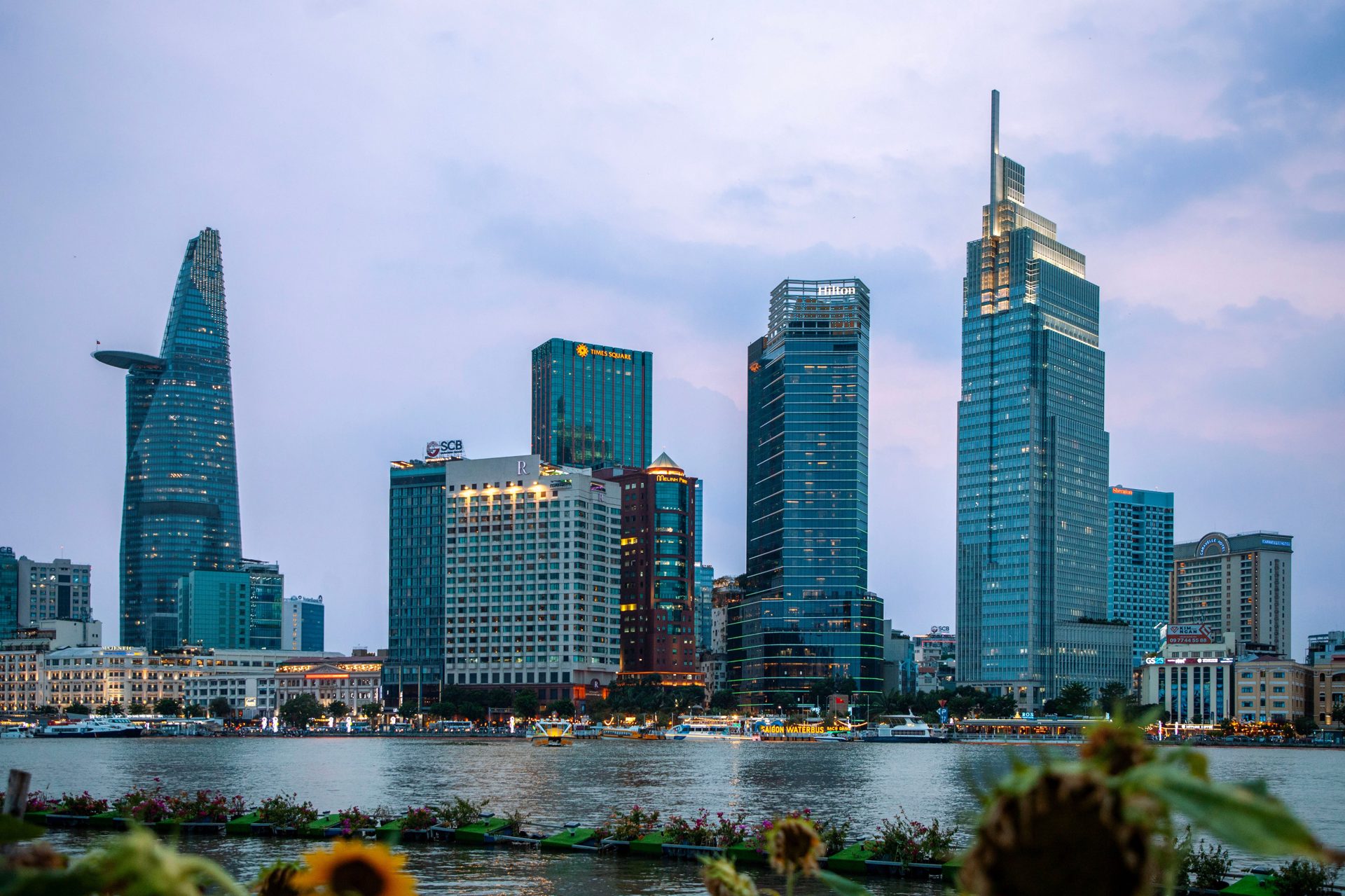
Vietnam's economy is already one of the largest in Southeast Asia today.
Key drivers:
- industrial manufacturing;
- exports;
- high-tech sector;
- middle-class growth;
- urbanization.
The country actively attracts global corporations:
- Samsung;
- Intel;
- Apple;
- LG;
- Foxconn.
This creates:
- jobs;
- internal migration;
- long-term housing demand.
Cambodia
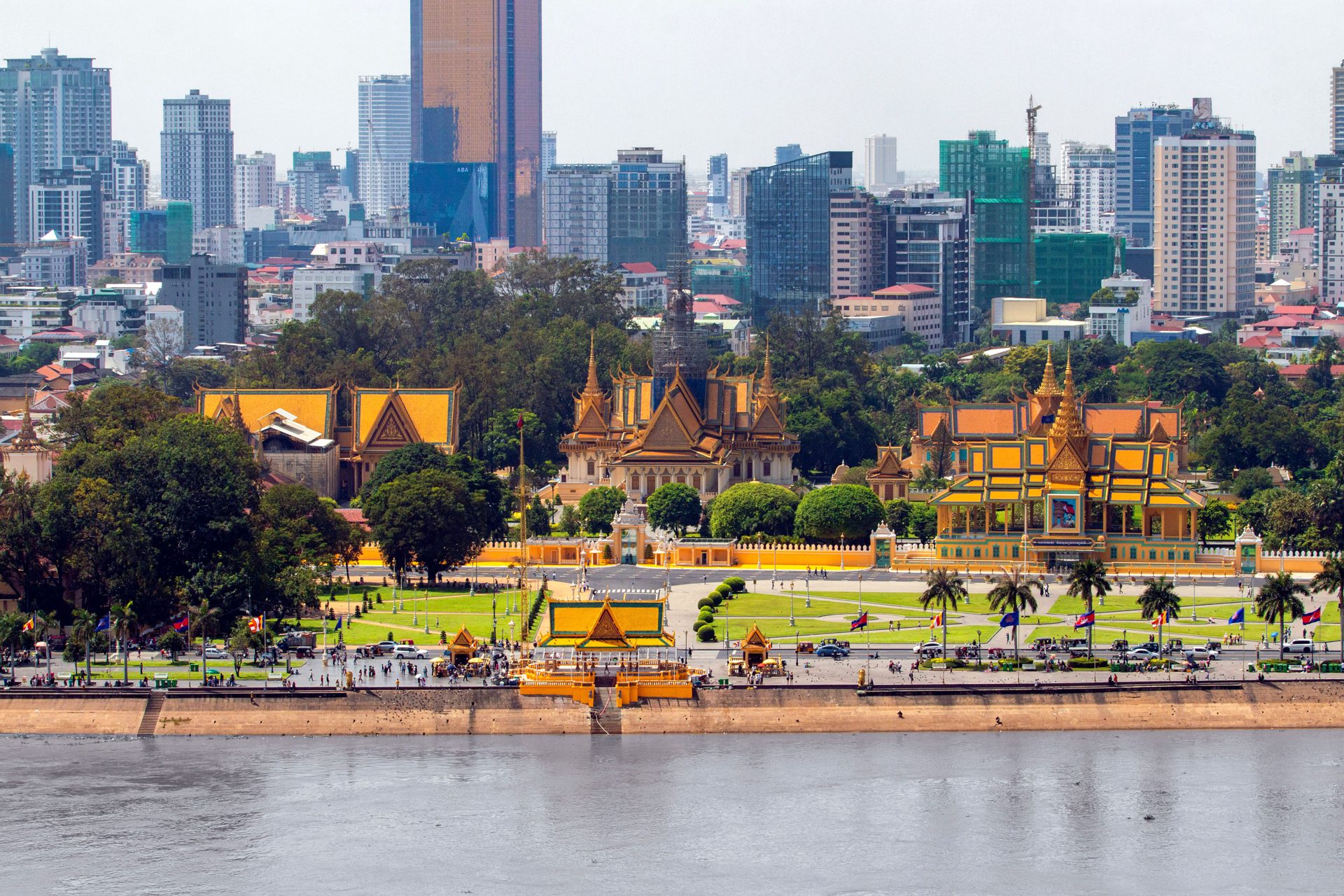
Cambodia's economy remains significantly less diversified.
Key sectors:
- textiles;
- tourism;
- construction;
- agriculture.
This makes the market:
- more sensitive to external shocks;
- more dependent on foreign capital;
- less resilient during crises.
Why Local Demand Matters More Than Foreign Demand
One of the most crucial factors in any real estate market is the share of domestic demand.
Vietnam: A Market Driven by Local Demand
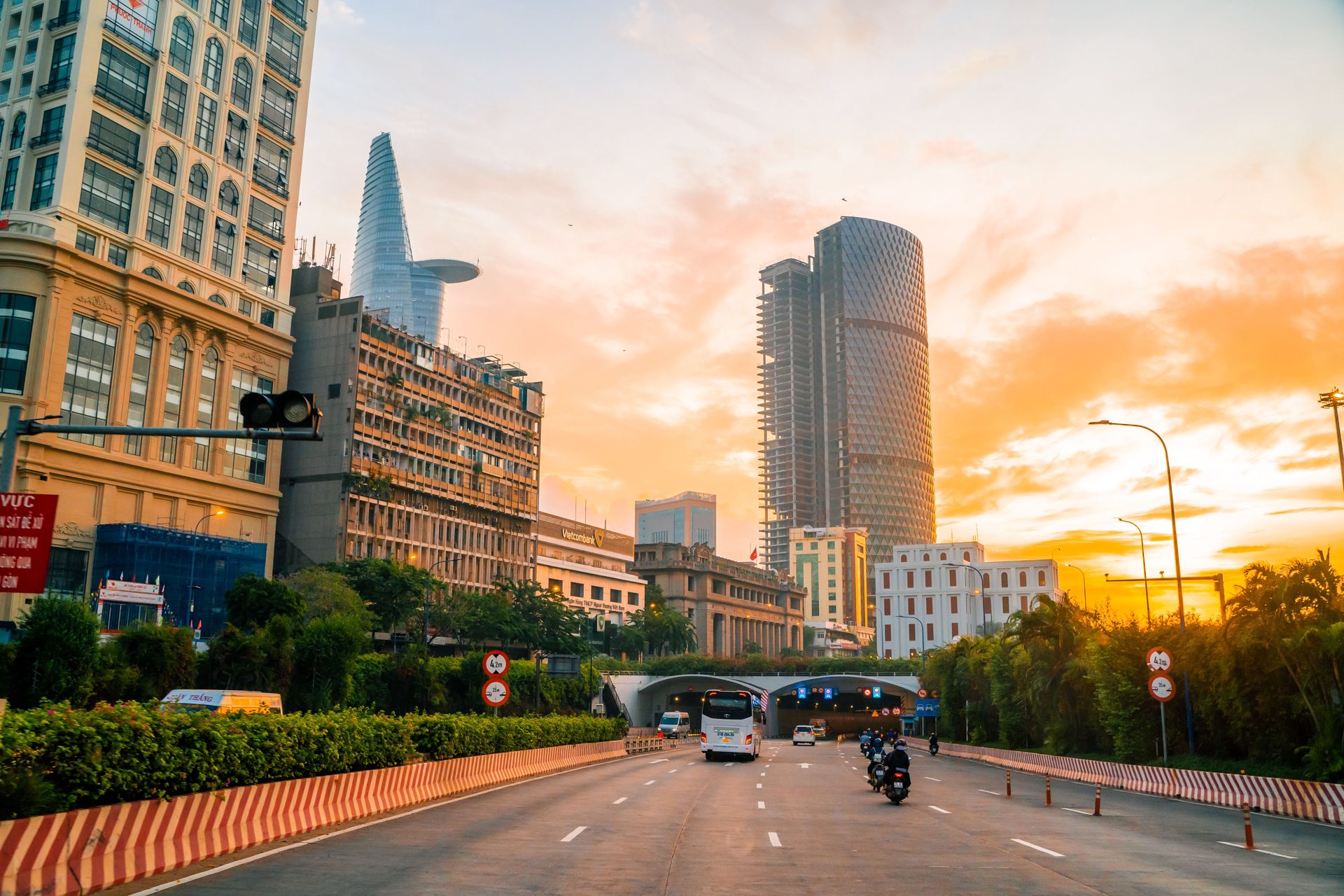
According to various estimates, around 98% of real estate transactions in Vietnam are made by local citizens.
This is critically important.
Even if:
- foreign demand declines;
- the global market deteriorates;
- interest rates rise;
The domestic market continues to support:
- liquidity;
- rentals;
- the secondary market.
Cambodia: Dependence on Foreigners
In Cambodia, the share of foreign buyers is significantly higher.
This is especially noticeable in the:
- Phnom Penh condo market;
- luxury segment;
- investment projects.
The problem with this model is that the market becomes:
- more volatile;
- more dependent on external capital;
- more sensitive to global crises.
Infrastructure: The Main Driver of Long-Term Growth
One of the most underrated factors in the real estate market is infrastructure investment.
Vietnam
Vietnam is currently investing massive funds into:
- the metro system;
- highways;
- ring roads;
- airports;
- ports;
- industrial zones.
The sheer volume of the country's infrastructure investment alone is already comparable to Cambodia's entire GDP.
This creates:
- new urban corridors;
- growth in satellite markets;
- internal migration;
- long-term property capital appreciation.
Cambodia
In Cambodia, infrastructure is developing significantly slower.
Despite:
- a new airport;
- individual road projects;
- Chinese investment;
the scale of infrastructure transformation is not yet comparable to Vietnam.
Property Ownership Rights: Where the Model is More Stable
This is one of the most widely discussed topics among foreign investors.
Cambodia: Freehold
Cambodia offers foreign buyers full freehold ownership for condominiums.
This is indeed a major strength of the market.
Vietnam: 50+50 Years

In Vietnam, foreigners receive:
- 50-year ownership rights;
- with the option to extend for another 50 years.
At first glance, this model might seem weaker.
However, the market has an important unique feature:
When reselling the property to a Vietnamese citizen, the ownership tenure becomes indefinite again.
Thanks to strong local demand, this supports the liquidity of the secondary market.
Investor Protection: A Key Factor
This is where the difference between the two markets becomes particularly noticeable.
Vietnam
Vietnam has a construction guarantee system in place.
This means that if a project runs into trouble, buyers have an added layer of protection.
In addition:
- the market is more strictly regulated;
- major developers have a track record of completed projects;
- banking oversight is higher.
Cambodia
In Cambodia, the investor protection system is significantly weaker.
Key risks:
- delays;
- postponed deadlines;
- stalled projects;
- oversupply.
Some developers fund the construction of new projects through the sales of future phases.
This significantly increases risk in the event of a market downturn.
Case Study: TT Avio vs. Times Square 8
To understand the difference in investment logic, it is helpful to compare two projects.
TT Avio — Vietnam

Location
Binh Duong, Ho Chi Minh City metropolitan area.
Key Drivers
- industrial growth;
- population migration;
- infrastructure integration;
- high local demand;
- proximity to industrial zones.
Strengths
- construction is already underway;
- high absorption rate;
- active secondary market;
- developed infrastructure.
Key Risks
- construction delays;
- market correction;
- infrastructure dependency.
Times Square 8 — Cambodia

Location
Phnom Penh.
Key Drivers
- foreign demand;
- urban development;
- new airport.
Key Risks
- construction has not started yet;
- high dependence on foreign buyers;
- weak secondary market;
- low occupancy rate;
- risk of delayed completion timelines.
Why the Secondary Market is Critically Important
Many investors evaluate a market based solely on:
- presale prices;
- marketing presentations;
- promised yields.
However, the true resilience of a market is demonstrated precisely on the secondary market.
Vietnam
In Vietnam:
- there is an active local secondary market;
- internal migration is high;
- the middle class is growing;
- a housing deficit persists in major cities.
Cambodia
In Cambodia, several years after completion, some projects:
- are sold at presale prices;
- or even at a discount.
This indicates:
- limited local demand;
- weak market depth;
- dependence on foreign capital.
Which Market is Riskier
It is important to understand: high potential growth almost always entails higher risk.
Vietnam
Key risks:
- complex regulation;
- restrictions for foreigners;
- bureaucracy;
- uneven market transparency.
Cambodia
Key risks:
- project freezes;
- dependence on foreign demand;
- low market depth;
- weak regulation;
- unstable secondary market.
Summary
Both markets can deliver high yields on select projects.
However, their underlying investment logic is fundamentally different.
Vietnam
This is:
- an infrastructure-driven narrative;
- industrial growth;
- middle-class growth;
- local demand;
- urbanization.
Cambodia
This is:
- a more speculative market;
- high dependence on foreign capital;
- greater risk;
- lower institutional stability.
For long-term investors, Vietnam currently presents a more sustainable real estate market model, particularly in:
- urban residential;
- comfort-class;
- infrastructure-driven locations.
FAQ
Where are the risks higher: in Vietnam or Cambodia?
On average, Cambodia is considered a higher-risk market due to weak regulation and heavy dependence on foreign buyers.
Can a foreigner own real estate in Vietnam?
Yes, foreigners can purchase commercial housing with 50+50-year ownership rights.
Where is local demand higher?
Domestic demand is significantly higher in Vietnam, forming the backbone of the market.
Which is more important for market growth: foreign buyers or local demand?
For long-term stability, local demand generally plays a more critical role.
Why is infrastructure so important?
Infrastructure investments create new jobs, improve connectivity, and stimulate property value appreciation.
Which is safer: a condo in Vietnam or Cambodia?
Much depends on the specific project and developer, but Vietnam's market is generally considered more institutionally stable.
Why is the secondary market important?
The secondary market reflects the true liquidity of real estate and the actual depth of demand.
Which segments are the most promising in Vietnam?
Comfort-class and urban residential projects in the infrastructure corridors of major cities are considered among the most sustainable segments.