Most people buy an apartment where it is convenient to live. Lifestyle strategy investors buy where it is convenient to live for an increasing number of people — and understand why that number will grow.
This is not a bet on tourism. It is not a bet on industrial growth. It is a bet on a fundamental shift: as incomes rise, people start choosing not just housing, but a living environment. And this choice becomes a measurable source of investment yield.
What Is a Lifestyle Strategy
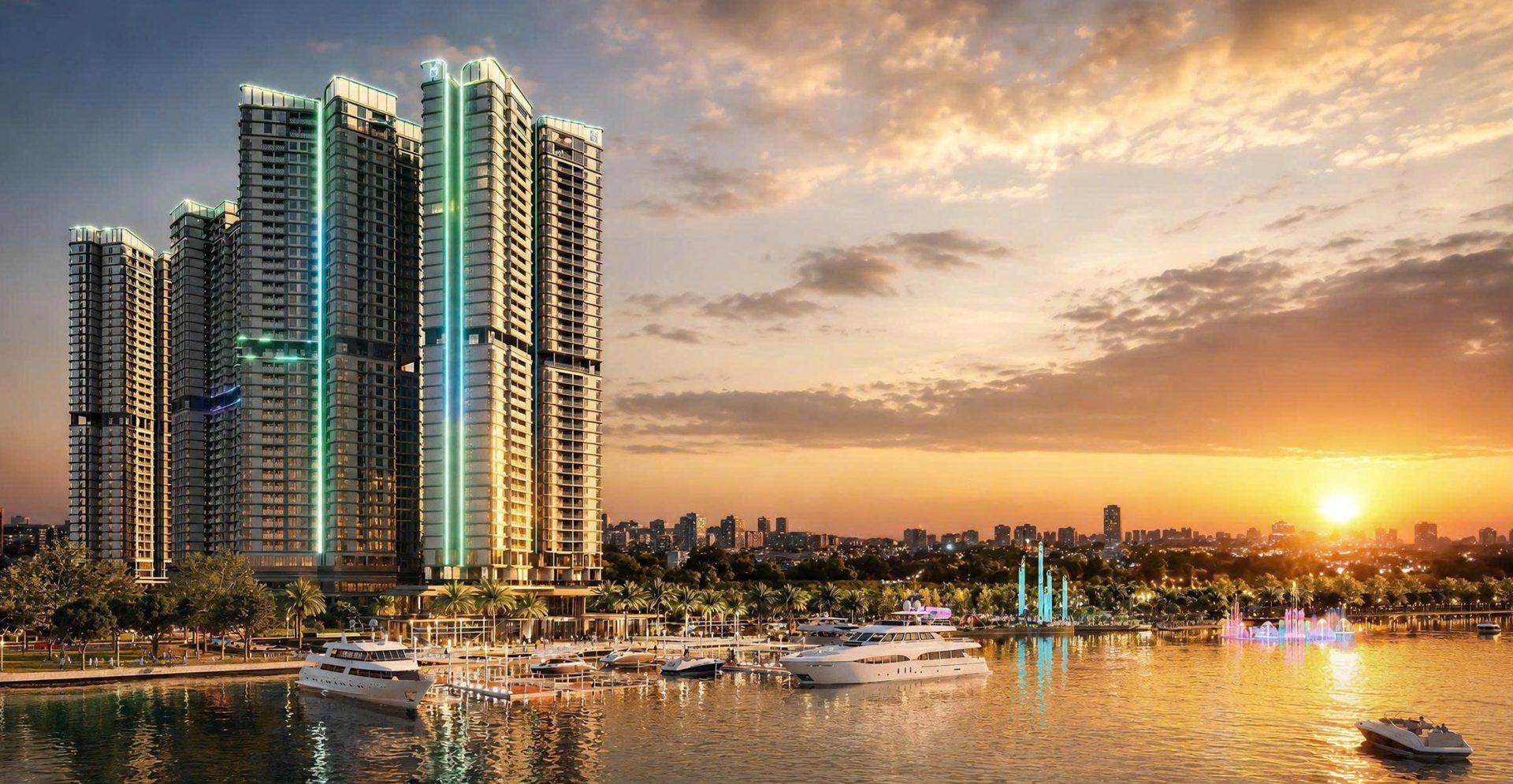
Unlike structural growth strategies, urban clusters, or hotel deficit strategies, the lifestyle strategy targets a different type of demand.
Here, the buyer is not an industrial worker with a mortgage, not a businessman in a commercial center, and not a tourist renting a villa for a week. The buyer here is a professional, an entrepreneur, a digital nomad, or a family that consciously chooses a place to live. They pay for the quality of the environment: walkable restaurants and cafes, parks and public spaces, sports infrastructure, community, and the rhythm of everyday life.
It is important to understand: lifestyle does not mean the sea. The sea is just one of the possible characteristics of a location, but not a mandatory one. The same mechanics work in the new urban quarters of Ho Chi Minh City, transforming districts of Hanoi, and regional hubs. The key sign is not geography, but a set of features: the infrastructure is already functioning, people come here not only to live but to spend time, and a place identity is taking shape.
The yield mechanism here looks as follows:
Population income growth → Shift in consumer preferences → Demand for high-quality urban environment → Concentration of residents → Rental growth → Asset value revaluation
Two income streams work in parallel. The first is current rental yield: high-quality properties in the right locations are consistently rented out because demand for long-term rentals from professionals and expats is structural rather than seasonal. The second is capital appreciation: as the neighborhood builds a reputation as a place to live, the price per square meter converges with more mature urban locations.
What Is a Lifestyle Market: Environment Over Geography
A lifestyle strategy applies where three conditions are met simultaneously: solvent demand for quality of life has already formed, the urban environment is functioning — not just being built — and the supply of properties of the required standard is limited.
Fundamentally different types of markets fall under this description.
New urban quarters of major metropolitan areas. Ho Chi Minh City is the largest residential market in Vietnam, accounting for 48% of the country's volume. Its eastern corridor is actively transforming with new transport interchanges, ring roads, and the future Long Thanh International Airport. Integrated districts are taking shape here with their own commercial infrastructure, parks, and event programming — not tourist-oriented, but genuinely urban. Apartments in such projects cater to families, professionals, and business owners who choose everyday quality of life within a big city.
Cities at the point of identity transformation. Da Nang is a different type. Here, the transformation went from a tourist destination to a full-fledged city to live in. By 2025, Da Nang ranked among the world's leading cities for digital nomads: cost of living at $800–1,200 per month, internet speeds 80+ Mbps. But the right lifestyle properties here are not beachfront resort apartments, but urban projects along the Han River promenade in central districts, aimed at long-term tenants.
The common denominator of both types is not geolocation, but a set of characteristics: a functioning commercial environment, a steady flow of people, a shortage of high-quality housing in that specific setting, and a growing middle class willing to pay for it. According to McKinsey, Vietnam's middle class will expand from 13 million in 2020 to 36 million by 2030. The rate of urbanization is 3.06% per year. This demand does not end after the beach season.
Case Study: The Filmore Da Nang
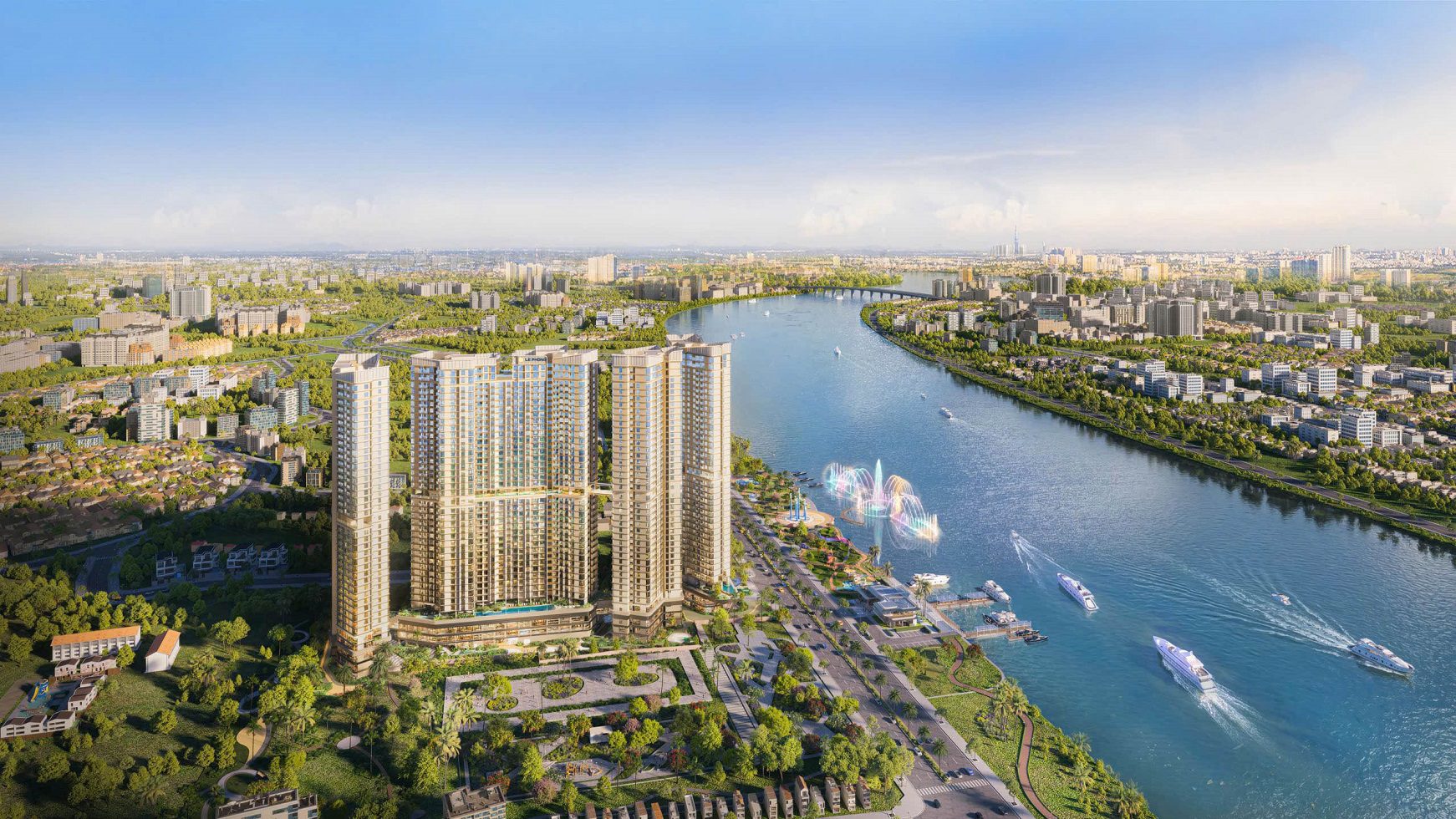
The Filmore is a 25-story residential project on the Han River waterfront, in the central Hai Chau and Binh Thuan districts. 206 apartments ranging from 44 to 131 sq.m, with one to three bedrooms.
It is important to establish this right away: The Filmore is an urban project, not a resort one. It is not located on the beach or in a tourist cluster. Its location is the business and residential core of Da Nang, on the urban river promenade, within walking distance of dining, commercial, and office infrastructure. The investment thesis here is completely urban.
Entry logic. The project entered the market at a time when Da Nang was still perceived primarily as a tourist destination, and its potential as an independent urban center for living and working was not priced in. This exact gap between reality and perception created the investment opportunity.
What happened. According to data from the VINPROP investment memorandum:
- Asset value growth: +54%
- Rental rate growth: +28.6%
- Rental yield: 6% per annum
For comparison: the average rental yield for business-class residential property in Ho Chi Minh City during the same period was around 3.5%. For resort/tourist properties in Da Nang without clear positioning, it was 2–4%.
Main lesson. Rental income was driven not by tourist flows, but by long-term urban demand: specialists at Vietnamese IT companies, digital nomads, and expats working for international organizations. This type of demand does not drop off during low season — because it has no season. People live here year-round.
How the Yield Mechanism Works: A Layered Breakdown
The lifestyle strategy is the only one among the five where yield is largely driven by the operational activity of the urban environment itself, rather than solely by market growth.
Environment first, value second. The classic sequence of development: housing is built first, and infrastructure is added later. A lifestyle strategy turns this sequence upside down. When an investor enters a project, the urban environment is already established: cafes and restaurants are open, public spaces attract traffic, and the area is already recognizable. The residential asset enters the market at a moment when the base capitalization of the environment has already occurred — but the pass-through of that value to residential real estate is not yet complete.
Traffic as a predictor of liquidity. If tens of thousands of people visit an area weekly, it is not just a marketing metric. It is an indicator that the district has acquired an identity and depth of recognition. Such a territory forms a broader pool of potential buyers — which directly impacts sales velocity and pricing power upon exit.
Rental demand: Long-term vs. Short-term. The key distinction of lifestyle properties compared to resort ones is the tenant profile. A professional renting an apartment for a year or two provides a stable cash flow without the operational burden typical of short-term rentals. Occupancy does not drop during off-peak seasons. ADR does not depend on tourist sentiment.
Price convergence. As an area becomes a recognized urban center, the price per square meter begins to converge with more mature locations. This works both in Da Nang (the Han River promenade converging with the historical center) and in HCMC (new quarters of the eastern corridor converging with District 1). The mechanism is the same — only the context changes.
Notice that there is nothing inherently coastal in this mechanism. A park instead of a beach, an event venue instead of a sea promenade, urban retail instead of tourist retail — all of these create the exact same chain: environment → traffic → demand → value.
Three Signals We Look for to Find Suitable Properties
The Filmore in Da Nang and new-generation integrated projects in HCMC are examples of the same mechanics in different cities. The strategy is replicable — you just need to find a property where these signals can already be read.
First signal: The urban environment is already functioning, but residential capitalization is incomplete. The infrastructure works, people come here not only to live but to spend time — yet residential price growth has not fully reflected this value. This is the entry point: the environment is proven, but the revaluation lies ahead. Note: this applies to any functioning environment — a park, a commercial street, an event space, a river promenade — not necessarily the sea.
Second signal: Long-term rental demand rather than tourist demand. We are looking for a concentration of professionals, entrepreneurs, and expats — people who rent housing for a year or longer. Nearby IT companies, universities, international organizations, and business clusters are a good starting point. This demand has no off-season.
Third signal: Deficit of high-quality supply in that specific environment. There may be many apartments — but integrated projects with their own functioning infrastructure are usually very few per market. When there are only one or two such projects for a broad audience, it creates a structural deficit that supports both price and liquidity.
If you are interested in which properties meet these criteria today, we cover this during consultations.
How This Strategy Differs from the Other Four
A different type of tenant. In a structural growth strategy, the tenant is an industrial worker or young specialist. In a hospitality strategy, it is a tourist. In a lifestyle strategy, it is a high-income professional or expat selecting a living environment for a 1–3 year horizon. Rental rates are higher, and occupancy is more stable.
Different dependence on the macro cycle. Lifestyle demand is less sensitive to tourist fluctuations and less dependent on industrial cycles. It is shaped by long-term demographic and economic processes — middle-class expansion, urbanization, and lifestyle changes. These processes do not halt during economic downturn quarters.
Different horizon and yield profile. Compared to a capital concentration strategy (premium business hubs), a lifestyle strategy involves a slightly broader buyer pool and a more accessible price point. Yield is generated from two equal streams — ongoing rent and capital growth — rather than prioritizing one over the other.
Lower entry barrier. Lifestyle-class assets are generally accessible with less capital than premium business-center assets or resort villas. This makes the strategy applicable to a wide range of investors.
Risks of the Strategy
Slowdown in urban environment formation. Part of the investment thesis depends on how quickly a district establishes its reputation. If the development of commercial infrastructure, event activity, and community slows down, housing prices appreciate slower than expected. The primary protective measure: choose properties where the environment is already operational, not just planned.
Increase in competing supply. A successful location attracts other developers. The arrival of numerous similar projects exerts pressure on rental rates. Defense: the scarcity of the environment itself — large-scale integrated infrastructure (parks, commercial streets, event venues, sports facilities) is hard to replicate quickly. It is not the same as putting up another residential tower.
Market cycles. Despite greater resilience to external shocks compared to resort real estate, the lifestyle market is not immune to general macroeconomic conditions. A drop in buyer activity during crises can temporarily reduce liquidity.
Longer exit horizon. Full capitalization of an urban environment is a 5–10 year process. If an investor counts on a quick exit with a maximum premium, this timeline must be factored in. Properties bought at the right phase of the cycle (environment ready, residential capitalization incomplete) minimize this risk.
Legal structure. As with other strategies, the format of ownership rights is essential. Properties with a full Pink Book for foreigners ensure liquidity on the secondary market — this must be verified prior to entry.
If This Strategy Resonates with You
The lifestyle strategy is a bet on a fundamental and long-term trend: rising incomes and shifting consumer preferences among Vietnam's middle class, alongside a steady influx of international professionals into high-quality urban locations.
Yield here stems from two sources: consistent rental income from long-term tenants and capital appreciation as the district gains recognition. For investors seeking a balance between current income and capital growth without relying on tourism cycles, it is a natural fit.
We currently have active projects under this strategy. If you would like to analyze a specific opportunity, book a consultation. We will discuss location, rental potential, financial modeling, and legal structure.