Da Nang is a market that is often undervalued because it is misread. It is commonly perceived as a beach resort — and that is a mistake. Vietnam's third-largest city, with a population of 1.2 million people, is a fully-fledged business and technology hub featuring an international airport, the largest IT cluster outside of Hanoi and Ho Chi Minh City, and a mature expat infrastructure. It is this urban environment, rather than the sea, that forms the long-term investment thesis here.
Da Nang in Figures
| Parameter | Value |
|---|---|
| Population | 1.2 million people |
| Direct flights | 25+ international destinations |
| Employed in the IT sector | 30,000+ (FPT Software and others) |
| Property price growth (3 years) | +54% in key districts |
| Rental rate growth (3 years) | +28.6% |
| Rental yield | 5–7% |
| Entry price | $1,500–6,000/m² |
| Foreign quota | 30% of total units in a building |
Why Investors Are Looking at Da Nang
Urban Environment Quality as an Investment Asset
Da Nang is the only major Vietnamese city that made a fundamental decision in the 2000s: no heavy industry. This created an urban environment that differs fundamentally from industrial agglomerations: clean air, a pedestrian promenade along the Han River, and centralized development without chaotic industrial zones. It is this, rather than the beaches, that attracts IT sector workers, digital nomads, and long-term corporate international tenants.
IT Cluster as a Base for Stable Rental Demand
FPT Software — the country's largest tech employer — holds its flagship campus here. Nearby is the high-tech zone Da Nang Hi-Tech Park, with residents including both international and local companies. In total, the IT sector in Da Nang employs over 30,000 people with above-average national incomes. These are not tourists who leave in October. They are permanent tenants with one- and two-year contracts.
International Connectivity
Da Nang Airport serves direct flights from Korea, Japan, China, Russia, Thailand, Singapore, and a number of European destinations via hubs. This creates a tenant profile unique to Vietnam: international specialists or entrepreneurs choosing Da Nang as a base for regional work. Such tenants pay more, stay longer, and move less frequently.
Capital Appreciation: Real Numbers
Over the last three years, prices in key districts of the city grew by 54%, and rental rates by 28.6%. Rental yields in the quality residential segment remain at 5–7% — higher than in Ho Chi Minh City, with a lower entry threshold. These are not projected figures — this is market dynamics confirmed by completed transactions.
Da Nang Investment Zones
Zone 1. Han River Waterfront — Premium Segment

Prices: $3,500–6,000/m²
Rental Yield: 5–6%
Tenant Profile: international specialists, corporate expats, digital nomads
The Han River waterfront is the strategic axis of the city. Located here are flagship residential complexes, business centers, restaurants, and cultural infrastructure. Key advantage: a permanent audience rather than a seasonal one. The tenant in this segment is not a tourist, but a resident living in the city.
This area is the equivalent of Thao Dien or the Saigon Riverfront in Ho Chi Minh City: an address with an established reputation, understandable to foreign buyers, and with proven liquidity.
Strategy: lifestyle + stable rental income. Suitable for an investor focused on international tenants and long-term capital appreciation.
Zone 2. Business Center and IT Corridor — Mid-Market Segment with Growth Potential
Prices: $1,800–3,500/m²
Rental Yield: 5–7%
Tenant Profile: IT specialists, young professionals, local managers
Districts to the west and north of the center — Hai Chau, Thanh Khe, Cam Le — are residential quarters close to business and technology zones. A lower entry price combined with comparable rental demand from IT sector workers generates high yields.
Infrastructure here continues to develop: new shopping centers, international-level schools, and major transport arteries.
Strategy: structural growth + rental yield. An optimal price-to-yield ratio for investors with a 5–7 year horizon.
Zone 3. Ngu Hanh Son — Resort and Premium Resort Segment
Prices: $2,000–5,000/m²
Rental Yield: 5–8% (with an operator)
Tenant Profile: tourists, short-term rentals, international guests
The Marble Mountains area and beach zone are traditional resort real estate territory. International hotel operators and branded resorts are concentrated here. High yield on short-term rentals, but with more pronounced seasonality compared to urban districts.
Strategy: hotel deficit + short-term rental income. Suitable for a passive investor working with a professional management operator.
Key Districts of the City
Hai Chau — historic center, administrative and business hub, Han River waterfront. Highest liquidity in the city.
Son Tra — peninsula northeast of the center. Panoramic views, quieter environment, developing infrastructure. Above-average growth potential.
Ngu Hanh Son — southern district, Marble Mountains, My Khe and Non Nuoc beach zones. Resort segment.
Cam Le — western residential district, close to the IT park. Affordable entry point, stable rental demand from IT employees.
An Hai Bac / An Hai Tay — quarters on the east bank of the Han, opposite the city center. A growing residential premium segment with river views.
Applicable Investment Strategies
- Lifestyle Strategy — the primary strategy for Da Nang. Quality urban environment, international tenants, consistent demand regardless of the tourist season.
- Structural Growth Strategy — the IT cluster creates a sustainable domestic demand base. Employment growth in the sector → increased demand for housing → rising prices.
- Hotel Deficit Strategy — in the resort segment (Ngu Hanh Son, Son Tra Peninsula), quality room inventory under international brands remains scarce. Inbound tourist traffic grows faster than supply.
- Capital Concentration Strategy — the Han waterfront is undergoing a gradual transformation: new developments are replacing aging stock, forming a premium address with long-term revaluation potential.
Real Case Study: The Filmore Da Nang
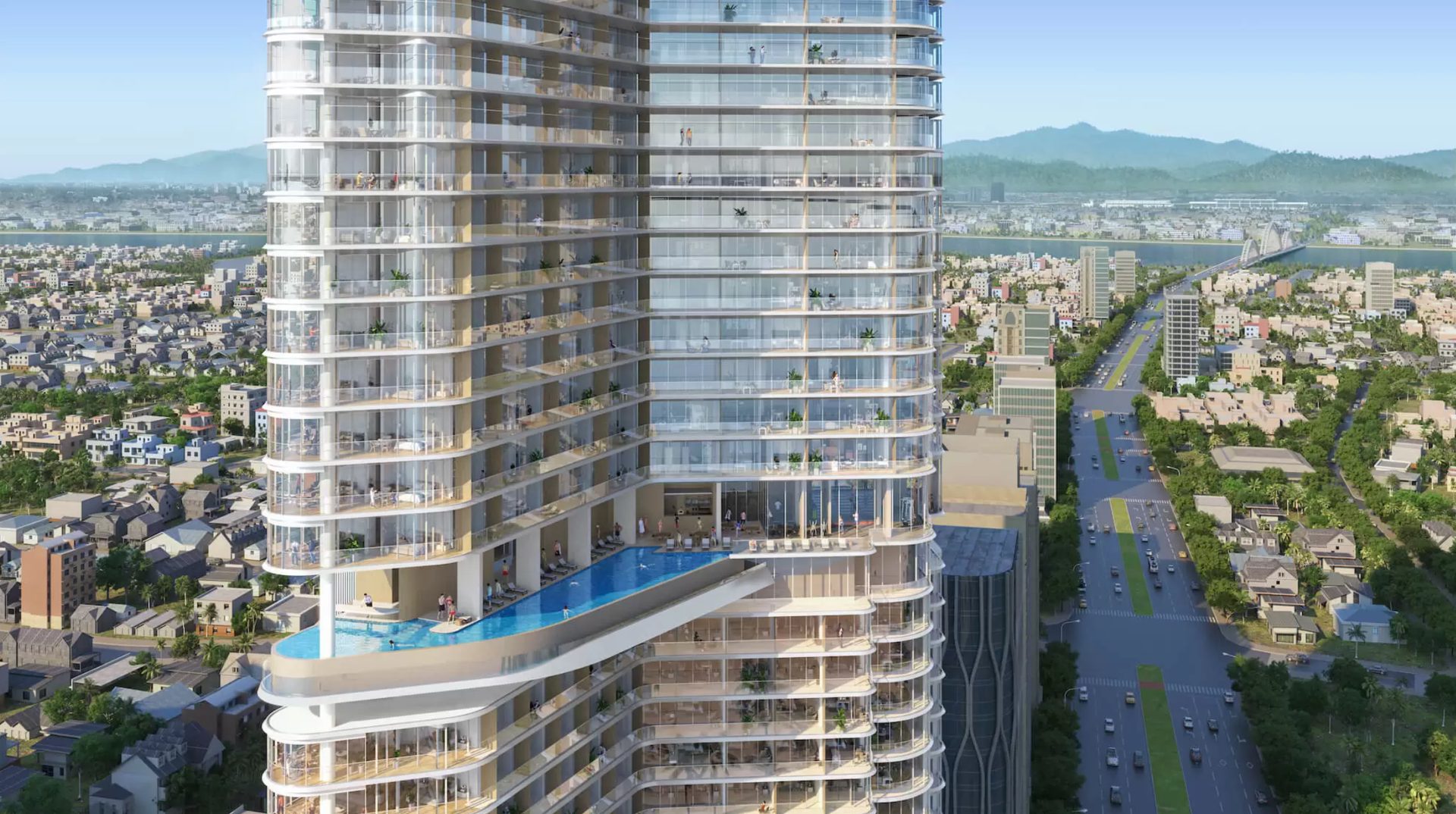
One of the benchmark projects in the market is The Filmore, an urban residential complex located on the banks of the Han River. It is not a resort property — it is high-quality urban housing featuring lifestyle-class infrastructure: fitness center, coworking spaces, restaurants, and concierge service. This format delivered solid results: +54% capital appreciation in three years, +28.6% rental rate growth, and a rental yield of around 6% on invested capital.
Key takeaway: in Da Nang, the rule is not "buy by the sea," but "buy in the right environment." The quality of the property and its urban context are the decisive factors for profitability.
Risks
Seasonality of Tourist Flow. October–November is typhoon season. Short-term rentals decline during this period. Urban districts with long-term tenants are far less exposed to this risk than resort areas.
Smaller Secondary Market Than Ho Chi Minh City. Exit liquidity is lower. The investment horizon should be at least 5 years.
Dependence on Flight Connections. Part of the international rental demand is tied to direct flights. Any route reductions impact the market.
30% Foreign Quota. In high-demand projects, quotas fill up fast. Buying on the resale market usually means paying a premium.
Supply Competition in the Resort Segment. Unlike urban districts, the beachfront area is saturated. Choosing the right operator and brand quality is crucial.
Market Statistics
| Indicator | Value |
|---|---|
| Price growth 2022–2025 (key districts) | +54% |
| Rental rate growth 2022–2025 | +28.6% |
| Rental yield, urban segment | 5–6% |
| Rental yield, resort segment | 6–8% |
| Prices, Han River waterfront | $3,500–6,000/m² |
| Prices, business / IT corridor | $1,800–3,500/m² |
| Prices, resort segment | $2,000–5,000/m² |
| Minimum entry budget | from $100,000 |
Da Nang vs. Ho Chi Minh City: How to Choose
Both markets work — but differently. Ho Chi Minh City offers maximum liquidity, a higher entry threshold, and greater potential for long-term capital appreciation. Da Nang offers a lower entry threshold, higher current rental yields, and a less competitive environment when selecting properties.
For an investor with a budget of $150,000–250,000 looking to acquire a quality asset with rental income from international tenants, Da Nang is often a more effective choice than Ho Chi Minh City at the same budget level.
For an investor with a 10+ year horizon focusing on maximum capital growth, Ho Chi Minh City — especially Thu Thiem and the eastern corridor — remains the primary choice.
For diversification, holding both markets within a single portfolio works well: different tenant profiles, distinct market dynamics, and low correlation.
We have up-to-date offers in both markets — book a consultation to select an option tailored to your goals.
FAQ
How does Da Nang differ as a market from Nha Trang and Phu Quoc?
Nha Trang and Phu Quoc are primarily tourist markets with strong seasonality. Da Nang is a hybrid market: a business center with a permanent population combined with tourism infrastructure. Rental income here depends less on tourist traffic because underlying demand is driven by the urban economy — the IT sector, businesses, and the expat community.
Is it better to buy by the Han River or near the sea?
For a long-term investor — by the river. The Han waterfront offers year-round rental demand from city residents and international professionals. The seaside segment yields higher short-term returns during peak season but depends on tourist flows and experiences stronger seasonality.
Who rents housing in Da Nang?
Three main categories: IT specialists and tech park employees (long-term rentals, stable contracts), digital nomads and work-from-Vietnam residents (mid- and short-term rentals), and tourists from Korea, Japan, Russia, and China (short-term). The first two categories generate the most reliable rental income.
What is the minimum budget to enter the market?
From $100,000–120,000 in the mid-market segment (business and residential areas). Premium projects on the Han River waterfront start from $180,000–200,000. In the resort segment with major operators, prices start from $150,000.
Are there typhoon-related risks?
Yes, climate risk is real. Typhoon season falls in October–November. Modern residential complexes are built with this risk in mind, meeting relevant structural codes. For long-term investors, this is primarily a factor in seasonal declines in tourist traffic rather than a threat to the asset itself. Selecting a developer with a proven construction record is key.
What investment horizon should be expected in Da Nang?
A minimum of 5 years for a confident exit. Optimally 7–10 years — this allows full realization of capital growth potential alongside the ongoing expansion of the IT cluster and urban infrastructure.
Does the 30% foreign ownership quota apply in Da Nang?
Yes, the quota is uniform across Vietnam: no more than 30% of units in a single building can be owned by foreigners. In popular developments, quotas fill up during sales launches. We track foreign quota availability for active listings — inquire when contacting us.