In March 2017, one of our clients purchased an apartment in a district that virtually did not exist yet.
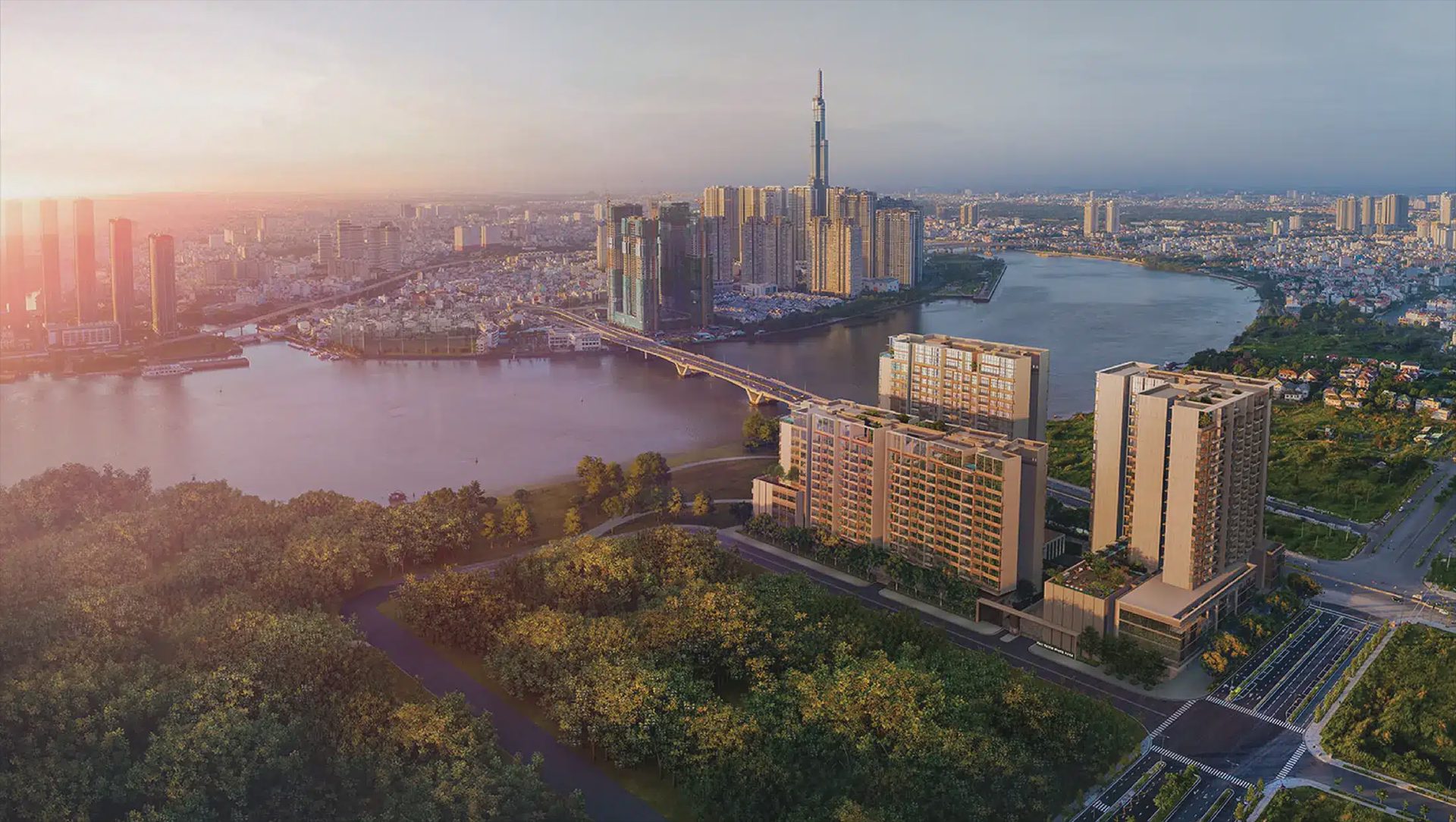
At the site of the future Thu Thiem — a vast area across the Saigon River from Ho Chi Minh City's historical center — there was only a construction wasteland. Ba Son Bridge was not there. Empire City was not there. The offices of Shinhan Bank and OCB were not there. Most of the developments that shape the district's landscape today did not exist.
A 90-square-meter apartment cost approximately $500,000 — around $5,000 per square meter. Many investors at the time considered this madness: in Thao Dien, an already developed and established neighborhood with restaurants and international schools, you could buy a comparable apartment for less.
Today, similar apartments in Metropole Thu Thiem sell for $10,000–$11,000 per square meter. The asset generates about $2,000 per month in rental income. The investor did not sell the apartment — and is receiving over 5% per annum on the invested capital with a fully revalued asset.
Why did this happen — and was it possible to spot this potential back in 2017? That is precisely what we will analyze in this article.
What Is the Capital Concentration Strategy?
The four previous strategies work with different sources of demand: industrial growth, urban transformation, hospitality deficit, and urban environment quality.
The capital concentration strategy works with a different phenomenon. It bets on a specific location becoming a new business and financial center — a place where offices, banks, international companies, capital, and people for whom the address matters consolidate.
This is a rare event. In most cities, such districts emerge once in a generation. But that is precisely why it creates one of the most significant investment opportunities in real estate.
The return mechanism works as follows:
New business district is formed → Offices, banks, and companies concentrate → Demand for nearby premium housing grows → Early investors capture maximum revaluation → Location status consolidates → Asset liquidity becomes global
Key point: the price starts to rise not when everything is ready. It starts to rise when the market begins to believe in the scenario — long before its completion. Investors who enter before this pivot in market perception receive the highest premium.
The yield here is twofold: rental cash flow from long-term corporate demand — professionals, expats, executives of international companies — and asset value appreciation as the location gains recognition.
Why Thu Thiem: The Location Selection Logic
The capital concentration strategy does not start with looking for a good apartment. It starts with finding the future focal point for business and capital.
Location selection criteria:
First: a state or municipal master plan providing for the creation of a business center — not at the level of developer marketing, but at the level of long-term planning. Such decisions are rarely revoked and create a predictable scenario.
Second: physical proximity to the existing business core alongside a barrier that has kept the market back until now. Revaluation happens precisely when this barrier is removed.
Third: a structural supply deficit — the entry window is physically or temporally limited.
Thu Thiem in 2017 perfectly met all three criteria.
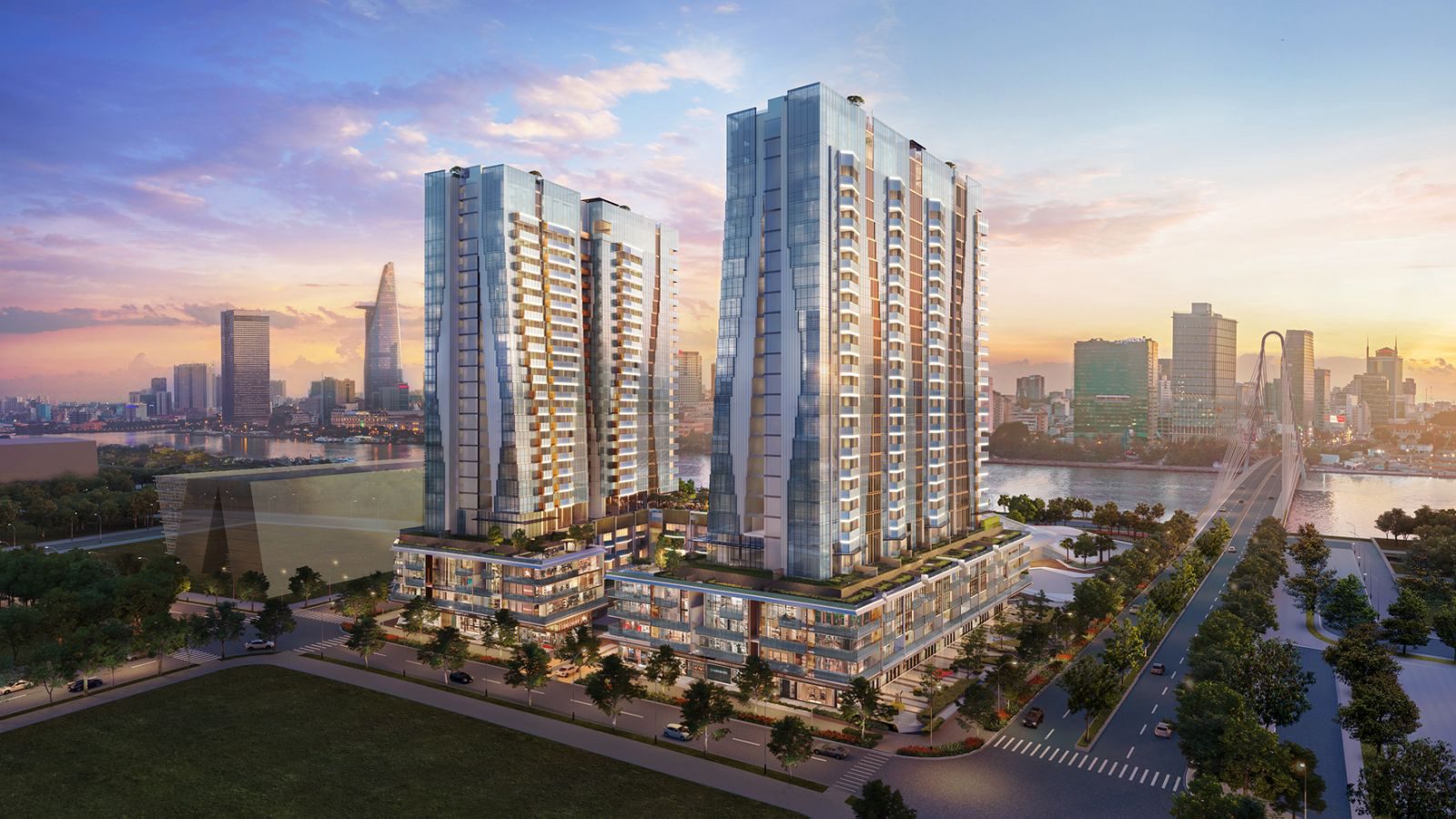
The district was designed by Japanese urban planners as "District 1.1" — an extension of District 1, Ho Chi Minh City's historical business core. At the same time, District 1 itself was physically constrained in its further growth: the best plots were taken, building density was high, and there were almost no opportunities for new high-quality development.
The river served as the barrier. However, plans were already in place to build the Ba Son Bridge to connect Thu Thiem directly with District 1. Executing this plan meant removing the barrier — and revaluing the entire area.
Today, we see that it happened exactly as planned. But it is crucial to understand: in 2017, none of this was proven yet. Investors made decisions under conditions of uncertainty.
Case Study: Metropole Thu Thiem
Having identified the location, investors faced the next question: which specific property to choose within the district.
In a new area, project selection is paramount. It is the initial high-quality developments that set the benchmark for the entire location. The one who sets this benchmark reaps the maximum benefit from the location's reputation.
Why Metropole. The developer — SonKim Land — had already successfully delivered Gateway in Thao Dien by then. The format featured a limited number of units with deliberately low density and the closest position to the future business core: Convention Center, Opera House, Central Plaza, and the waterfront promenade. Its position within the master plan was one of the strongest.
In essence, Metropole was created as a scarce product from the outset. Not the biggest project. Not the cheapest. But precisely the one that establishes the address.
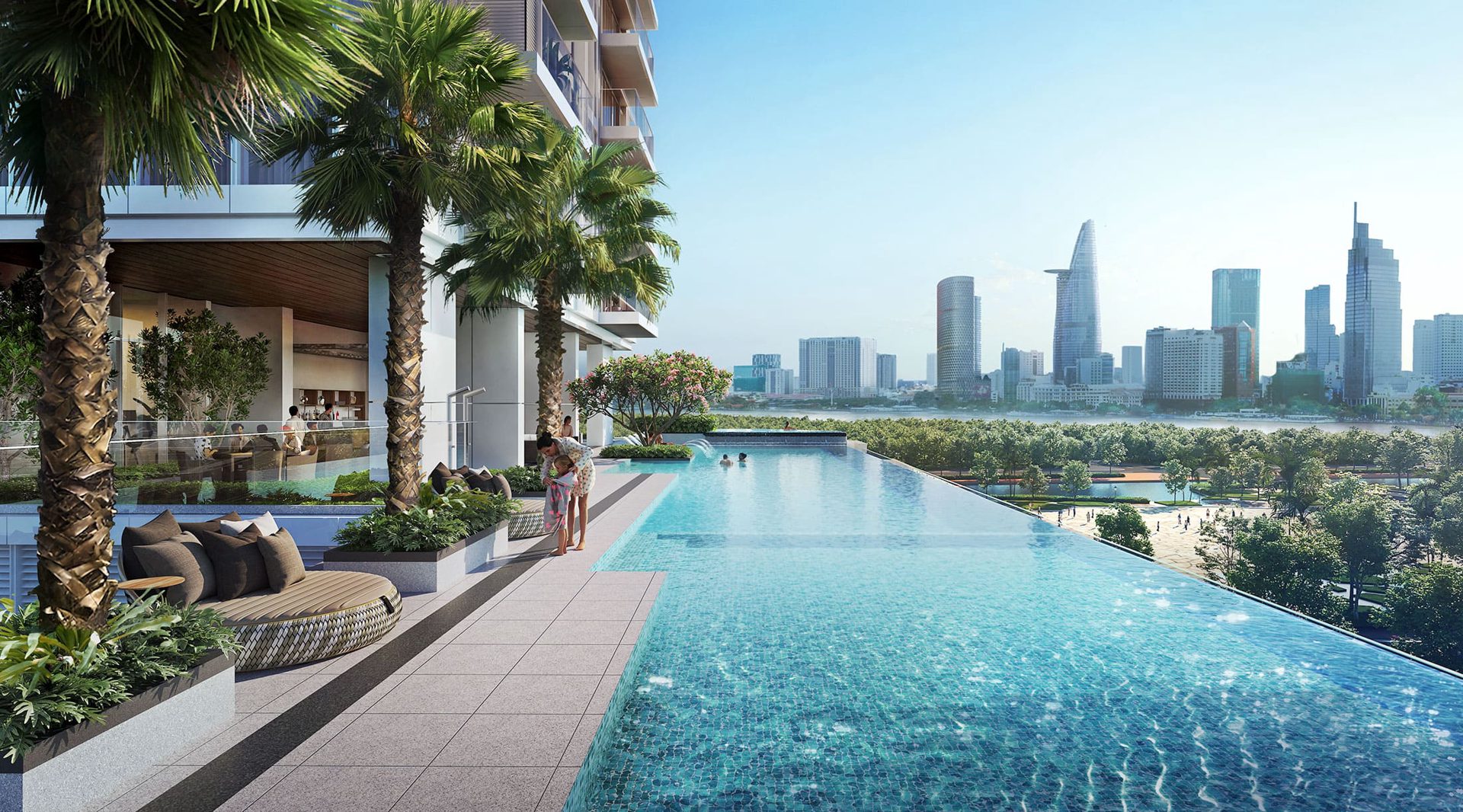
Which apartment. Property — 90 square meters, 10th floor, direct view of the Saigon River and District 1. A view of the historical center from the riverfront is an irreplaceable characteristic. You can build another residential complex in Thu Thiem. You cannot recreate another prime riverfront line with such an angle. These are the exact types of properties that historically hold their value best over the long run.
Results. According to the VINPROP investment memorandum:
- Entry price: ~$5,000/m² (2017)
- Current market value: ~$10,000–$11,000/m² on the secondary market
- Asset value growth: over 100%
- Current rental income: ~$2,000/month ($24,000/year)
- Return on invested capital: over 5% per annum
Moreover, the asset continues to participate in capital appreciation. The foreign quota in new phases of Metropole is consistently fully exhausted. Buyers include Korean, Singaporean, and Hong Kong investors, as well as high-net-worth Vietnamese individuals for whom Metropole has become a trophy address.
How the Yield Mechanics Work: Level-by-Level Analysis
The capital concentration strategy differs from the other four primarily in the nature of the demand that drives the returns.
Corporate demand as the primary driver. In Thu Thiem, rental cash flow is generated not by tourists or industrial workers. It comes from specialists and executives of international companies that have opened offices in the district, financial expat professionals, and individuals for whom living a two-minute walk from their central workplace is a functional necessity rather than an option. This demand lacks seasonality and remains resilient to tourism fluctuations.
The prime address effect. When Metropole set the standard for Thu Thiem, subsequent projects — Empire City, The River, Zeit — were compared against it, not vice versa. The first high-quality address in a new location commands a price premium that cannot be reclaimed by later entries. This is a structural advantage, not a coincidence.
Price convergence with the center. As the district's commercial activity approaches that of District 1, the price-per-square-meter gap between them narrows. In 2017, District 1 was disproportionately more expensive than Thu Thiem. Today, this gap is significantly smaller — and the process is far from over.
International Financial Center — the next level. Vietnam's International Financial Center is officially being established in Thu Thiem under a special regulatory framework and with the participation of international organizations, including Nasdaq. Concurrently, key administrative bodies of Ho Chi Minh City are planned to relocate here. The most expensive districts in global cities form around capital concentrations and decision-making centers — not around residential compounds.
The story of this location is far from over.
Three Signals for Identifying Similar Locations
Thu Thiem is the clearest example of this strategy in the Vietnamese market today. However, the strategy is replicable — you simply need to find a location at the right point in its cycle.
Signal one: a state plan to establish a business center that the market has not yet priced in. This is not developer marketing hype — it is a decision at the city master plan level, infrastructure investment level, and administrative status change. The gap between the master plan and the current market price represents the investment opportunity.
Signal two: physical proximity to an existing business core with a removable barrier. A river to be bridged. A road to be extended. A transit hub to be built. When the barrier is removed, perception of the location shifts rapidly — and prices respond proactively.
Signal three: business demand emerging before residential demand. When offices of major financial institutions or multinational corporations open in a district, it validates the location at a level developers cannot match. Companies do not open offices where there is no solid corporate future.
If you are interested in which locations meet these criteria today, we cover this during our individual consultations.
How This Strategy Differs from the Other Four

A different scale of revaluation. The capital concentration strategy is the only one among the five where capital appreciation is measured in hundreds, rather than tens, of percent over a 7–10 year horizon. This is because it involves a fundamental market re-evaluation of a location rather than a mere local improvement.
A different exit buyer profile. Once an address acquires prestige, the secondary market buyer pool becomes international. Investors from Korea, Singapore, Hong Kong, and Japan view such assets on par with their domestic markets. This provides a fundamentally higher level of liquidity.
A different horizon and risk profile. This strategy requires a longer time horizon than others. Establishing a business district takes 7–15 years. Price growth is non-linear: it concentrates around moments when the market shifts its perception. An investor unprepared for this non-linearity should not employ this strategy.
The highest barrier to entry. Assets in this class are premium, scarce, and subject to strict foreign ownership quotas. While this makes the strategy less accessible from a capital standpoint, it guarantees a structural supply deficit throughout the entire cycle.
Strategy Risks
Master plan execution may take longer than expected. Years can pass between plan approval and the actual emergence of business infrastructure. During this period, the investor holds the asset without visible growth catalysts. Mentally and financially, this requires readiness for a long-term horizon.
Commercial activity may not materialize to the expected volume. If international companies do not move in or financial hub developments are delayed, the investment thesis fails to materialize. Mitigation: enter only after initial commercial anchors emerge, rather than relying solely on master plans.
Early-stage liquidity is limited. Until the district builds its reputation, the buyer pool remains narrow. A quick sale within the first 3–5 years might require a discount. This is a hold strategy, not a speculation tool.
Competing supply risk. The success of a district attracts new developers. If the volume of new high-quality supply exceeds demand, price pressure may occur. Mitigation: select properties with exclusive characteristics (views, front-line position, low density) that cannot be replicated in mass developments.
Legal structure. As with other strategies, the ownership title format is critical. A Pink Book for foreign owners ensures liquidity in the international market — this is what makes an asset a trophy property rather than a purely local one. Without a full legal certificate, the buyer pool shrinks dramatically.
If This Strategy Aligns with Your Goals
The capital concentration strategy is the most demanding of the five in terms of capital requirements, time horizon, and psychological resilience. However, it is precisely what offers the maximum asset revaluation potential in the Vietnamese market.
Thu Thiem today is not the same opportunity it was in 2017. A significant portion of the revaluation has already taken place, and the cost of entry has risen. Yet, the formation of the business and financial hub is far from complete. The International Financial Center, the relocation of administrative headquarters, and the continued capitalization of corporate traffic are all ongoing processes.
The question is not whether Thu Thiem deserves attention today. The question is at which specific stage of the cycle it makes sense to consider a particular property — and whether similar opportunities exist in other locations.
We currently handle active projects within this strategy. If you would like to analyze a specific opportunity, schedule a consultation with us. We will discuss the location, financial model, legal structure, and timeline.