When most bank deposits yielded 3–4% annually in foreign currency, one asset class consistently generated 5–7% — and that excludes the appreciation of the physical asset itself.
This wasn't because there was no risk, but because the market physically couldn't deliver enough quality supply in time to meet the growing tourist flow.
This is precisely what is known as a structural deficit. And this is the foundation for VINPROP's third investment strategy — the Hotel Shortage Strategy.
What Is the Hotel Shortage Strategy?
Unlike the first two strategies — structural growth and urban cluster capitalization — the source of yield here comes from the resort market rather than residential real estate.
The mechanism is simple: tourist demand for a specific destination grows faster than new quality beachfront supply appears. The reason lies in objective constraints: beachfront land on the primary coastline is physically finite. Developing a hotel project with an international operator takes 4–6 years. Capital and expertise requirements are high. Major international brands are selective when choosing partners.
As a result, a deficit is formed — not temporary, but structural.
The Hotel Shortage Strategy is a bet on this gap. An investor acquires property located in a zone of sustained tourist demand with limited supply. Returns are generated in two ways: current rental yield from operations and asset appreciation as the deficit deepens.
The yield mechanism works as follows:
Growth in tourist flow → ADR growth → stable occupancy → RevPAR growth → operational income growth → asset value growth
- ADR (Average Daily Rate) — the average price per night.
- RevPAR — revenue per available room.
When both metrics grow simultaneously, investor returns increase faster than each metric would individually.
Why Phu Quoc: The Logic Behind Destination Selection
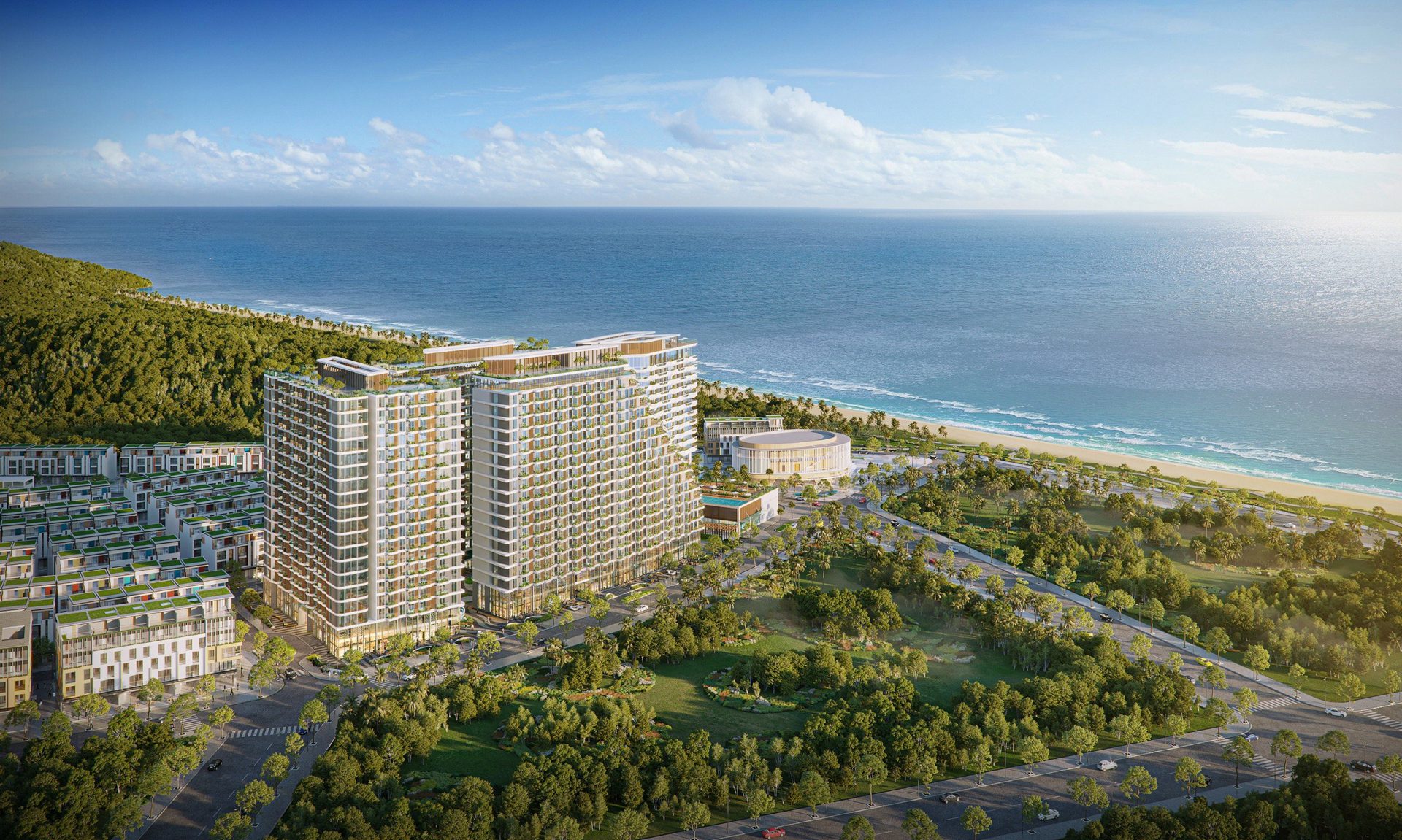
Execution of the Hotel Shortage Strategy begins with market selection. We look for destinations where three conditions are met simultaneously: tourist demand is established and growing, international transport accessibility is expanding, and new high-quality supply is physically constrained.
In 2019–2021, Phu Quoc was precisely that market.
Tourist Flow. In 2014, Phu Quoc welcomed around 600,000 tourists per year. By 2019, that number exceeded 5 million. By 2024, it reached nearly 6 million, with almost one million being international visitors. Over ten years, growth was ten-fold. This wasn't a temporary spike — it was a structural transformation of the island from a local resort into an international destination.
Transport Accessibility. The opening of Phu Quoc International Airport redefined demand geography. Direct flights from Korea, China, Russia, Kazakhstan, and Europe made the island accessible to travelers who previously could not physically reach it. Route network expansions continued even post-pandemic.
Limited Supply. The island's coastline is finite. By 2020, the prime beachfront parcels along Bai Truong — one of the most picturesque beaches — were divided among a few major developers. Virtually no comparable new land parcels remained.
This created a classic investment setup: demand is rising, and supply is physically restricted.
Case Study: Regent Phu Quoc
When studying Phu Quoc's resort market, property selection was guided by one key question: who manages the property, and how crucial is that for yield?
In hospitality real estate, an operator is not just a marketing add-on. It is an operational system that dictates occupancy, average daily rate, and net yield. An international brand of Regent's level provides access to IHG's global booking system, visibility among high-net-worth travelers, and operational standards that local management cannot replicate.
Regent Phu Quoc is a BIM Group project managed by Regent Hotels & Resorts (now part of IHG). Located on Bai Truong Beach, it comprises 76 ground villas, 42 sky villas, and 120 hotel suites spread across 15 hectares. It opened in April 2022.
The property was awarded a MICHELIN Key in 2025 as one of Vietnam's finest hotels. In the first phase of sales, 90% of inventory found buyers shortly after launch.
Revenue Model Structure. A villa or sky villa owner entrusts the property to the hotel operator. Rental revenue is shared between the owner and management company — typically a 40/60 or 50/50 split depending on the agreement. The operator covers operational expenses, including marketing, maintenance, and staffing.
Results. According to VINPROP investment memorandum data, the net yield on Regent Phu Quoc properties reached 5.56% per annum in USD, excluding asset capital appreciation.
For comparison, the average gross yield on business-class residential real estate in Ho Chi Minh City during the same period was around 3.5%. For standard resort apartments without an international hotel operator, yields hovered between 2–4%.
The yield differential is a direct result of management quality and a structural shortage of competing high-end supply. Regent in Phu Quoc wasn't competing against hundreds of alternatives — it operated in a category with virtually no direct competition.
Yield Dynamics: A Step-by-Step Breakdown
Investors unfamiliar with the hospitality model often focus solely on the top-line yield percentage. However, it is essential to understand its components and why market shortage plays a critical role here.
ADR (Average Daily Rate). When supply is scarce, pricing power lies with the seller. Amid a shortage of high-end international properties in Phu Quoc, peak season daily rates for a Regent villa or sky villa reached $400–$800+. Competitors in the same tier were virtually non-existent.
Occupancy. Consistent occupancy results directly from demand outpacing supply. In prime Phu Quoc areas, off-season occupancy didn't drop below 70–80%. RevPAR across the premium segment grew by an average of 13–15% annually between 2021 and 2026.
Net Yield = ADR × Occupancy × Owner Share − Operating Expenses. That is why a 5.56% net return under a top operator and in a prime location represents a base level rather than a cap.
Capital Appreciation. A sky villa purchased before Regent opened appreciated substantially by 2024, driven both by brand recognition and Phu Quoc's rise as a top destination. Investors earned returns twice: ongoing operational cash flow plus capital growth.
Three Key Signals We Use to Identify Similar Markets
Phu Quoc was a textbook example of multiple market drivers aligning. The strategy is repeatable — you just need to identify a market at a similar stage of growth.
Signal One: Growth in international tourist influx coupled with constrained hospitality infrastructure. This signals existing demand that current market supply cannot meet. Destinations expanding airport capacity or introducing direct international flights are strong indicators.
Signal Two: Physically limited primary beachfront land. Prime coastal land cannot be artificially duplicated. If most prime parcels are already developed or allocated, new quality supply will be infrequent and expensive.
Signal Three: Presence or active interest from international hotel brands. When global brands like Hilton, IHG, Marriott, or Accor choose a location, it serves as high-level market validation that local developers cannot provide. These brands do not enter locations without proven demand.
If you're interested in identifying markets that currently fit these criteria, we cover this during our consultations.
How This Strategy Differs from Residential Real Estate

It is important to understand the key distinctions between the hospitality model and strategies focused on structural growth or urban clusters.
Distinct Return Profile. In residential real estate, capital appreciation is the primary driver, while rental income is secondary. In hospitality assets, immediate yield comes first, offering investors steady cash flow from year one post-completion.
Operator Dependence. With residential property, management falls on you. In hospitality real estate, operations are handled by a professional operator. While this eliminates management hassle, it introduces operator dependency: performance relies heavily on the operator's execution quality.
Alternative Ownership Structures in Many Projects. A significant share of resort property in Vietnam was developed as guesthouses or apartment hotels, lacking full long-term ownership titles. This restricted resale market liquidity. Properties with full title certificates (Pink Book) available to foreign buyers are scarce and highly valued for this reason.
Cyclicality. Resort real estate is more sensitive to external shocks — pandemics, geopolitical shifts, or reduced flight connectivity. This represents a real risk to consider over long investment horizons.
Key Risks of the Strategy
Slowdown in Tourist Influx. A drop in international tourism impacts both ADR and occupancy rates. Phu Quoc experienced this in 2023 following a rapid surge in 2022. While the market recovered by 2024, the temporary slowdown highlights real exposure to tourism cycles.
New Supply Growth. A thriving resort market attracts new development. An influx of high-quality properties reduces structural scarcity, exerting downward pressure on ADR. That's why securing finite assets (prime beachfront, unique locations, top international brands) that are difficult to replicate is essential.
Operator Performance. A guaranteed yield on paper and net yield delivered at the end of an operational year are two different things. It is crucial to review the operator's track record on comparable projects, cost structures, and contractual terms. Consistent 5–7% returns require genuine operational excellence, not just favorable market conditions.
Exit Liquidity. Resort property is generally less liquid than urban residential units. Buyers for a Regent villa or similar luxury asset represent a niche market: high-net-worth individuals who understand the product. Selling quickly without a discount is possible, but the buyer pool is smaller.
Legal Framework. Ownership structure is critical. Properties without full Pink Book registration may be priced lower, but they carry legal uncertainties and restrict secondary market resale. Comprehensive due diligence must be completed before entering an agreement.
Is This Strategy Right for You?
The Hotel Shortage Strategy is the most specialized of the five strategies we implement. It requires an understanding of hospitality operational models, selecting the right operator, and evaluating structural demand-supply gaps in target destinations.
Returns here are generated differently than in residential markets: not only through capital appreciation, but through reliable ongoing cash flows. For investors seeking regular income, it offers an entirely different asset profile.
We have active projects matching this investment framework. If you would like to analyze a specific opportunity, book a consultation. We will cover the location, operator, financial model, and legal structure in detail.