In Vietnam, all land is under the collective ownership of the people and managed by the State on their behalf. Direct private land ownership is not provided for by law. Instead, the institutional basis for any real estate transactions is the concept of Land Use Rights (LUR).
Understanding the mechanics of LUR is extremely important for every investor: it is this status that determines how an owner can build, operate, lease, inherit, or sell their property.
What you will learn from this article:
- how the system of Land Use Rights (LUR) works in Vietnam;
- the difference between long-term/perpetual (Lâu dài) and fixed-term (Có thời hạn) land use;
- which land use formats are available to Vietnamese citizens and foreign investors;
- how land rights affect ownership of apartments, villas, and resort real estate;
- main legal requirements and responsibilities of an owner under Land Law No. 31/2024/QH15.
❗️ Important: The legal status of any building, apartment, or villa in Vietnam is inseparable from the legal regime of the land plot on which the project is constructed. Read more about available property categories, quotas, and the 50-year ownership period in the article “Property Ownership Rights for Foreigners”.
What are Land Use Rights (LUR) and How the System Works

Since land belongs to the State, individuals and legal entities receive official Land Use Rights (LUR) from the State or primary users. The official government confirmation of these rights (together with all structures on the plot) is the Certificate of Land Use Rights and Ownership of Houses and Other Assets Attached to Land — commonly referred to as the “Pink Book” (Sổ hồng).
Holding a valid LUR grants the right to:
- develop the plot in accordance with urban master plans and construction permits;
- lease properties for commercial or residential rental purposes;
- sell, donate, pass on as an inheritance, or contribute rights as equity capital;
- raise project financing and pledge assets (mortgage) with accredited banks in Vietnam.
Land Categories by Duration of Use
Vietnamese law divides land use rights into two key types:
1. Long-Term / Perpetual Use (Lâu dài / Long-term LUR)
- Essence: Has no time restrictions and is effectively equivalent to perpetual ownership.
- Who is eligible: Vietnamese citizens and Vietnamese companies for residential land (Đất ở).
- For foreign nationals: Direct long-term land ownership is not available to foreign individuals. However, when buying a residential apartment (Nhà ở thương mại) and reselling it to a Vietnamese citizen, the new local owner receives the property on a long-term (perpetual) basis.
2. Fixed-Term Use (Có thời hạn / Fixed-term LUR)
- Essence: Granted for a specific period — usually 50 years (up to 70 years in exceptional investment projects).
- Who is eligible: Applies to investment development projects, commercial properties, and is the primary ownership format for residential real estate acquired by foreign individuals.
- Extension: The law provides for the possibility of extending the usage term, provided that the land plot complies with current urban planning and land fees are paid in a timely manner.
| LUR Parameter | Long-Term Use (Lâu dài) | Fixed-Term Use (Có thời hạn) |
|---|---|---|
| Validity period | No time restrictions | 50 years (up to 70 in special projects) |
| Primary purpose | Residential land (Đất ở) | Development projects and commercial land |
| Vietnamese citizens | Available | Available for the duration of project implementation |
| Foreign citizens | Direct ownership unavailable | The only available format (50 years) |
| Term extension | Not required | Provided by law subject to conditions |
Classification of Land by Designated Purpose
The designated purpose of a land plot strictly regulates what can be built on the property:
- Residential Land (Đất ở): Intended for the construction of multi-apartment residential complexes and individual residential developments (villas, townhouses). Developers build commercial residential property projects (Nhà о thương mại) on such land, and buyers receive a Pink Book.
- Commercial and Service Land (Đất thương mại, dịch vụ): Used for building hotels, shopping malls, office complexes, and tourist apartments (Căn hộ du lịch / Condotel). Property ownership formats on such land are based on long-term leasehold contracts tied to the remaining period of the developer's land lease from the State.
- Industrial and Special Land (Đất khu công nghiệp): Allocated for factory facilities, logistics parks, and infrastructure development.
LUR Specifics for Foreign Investors
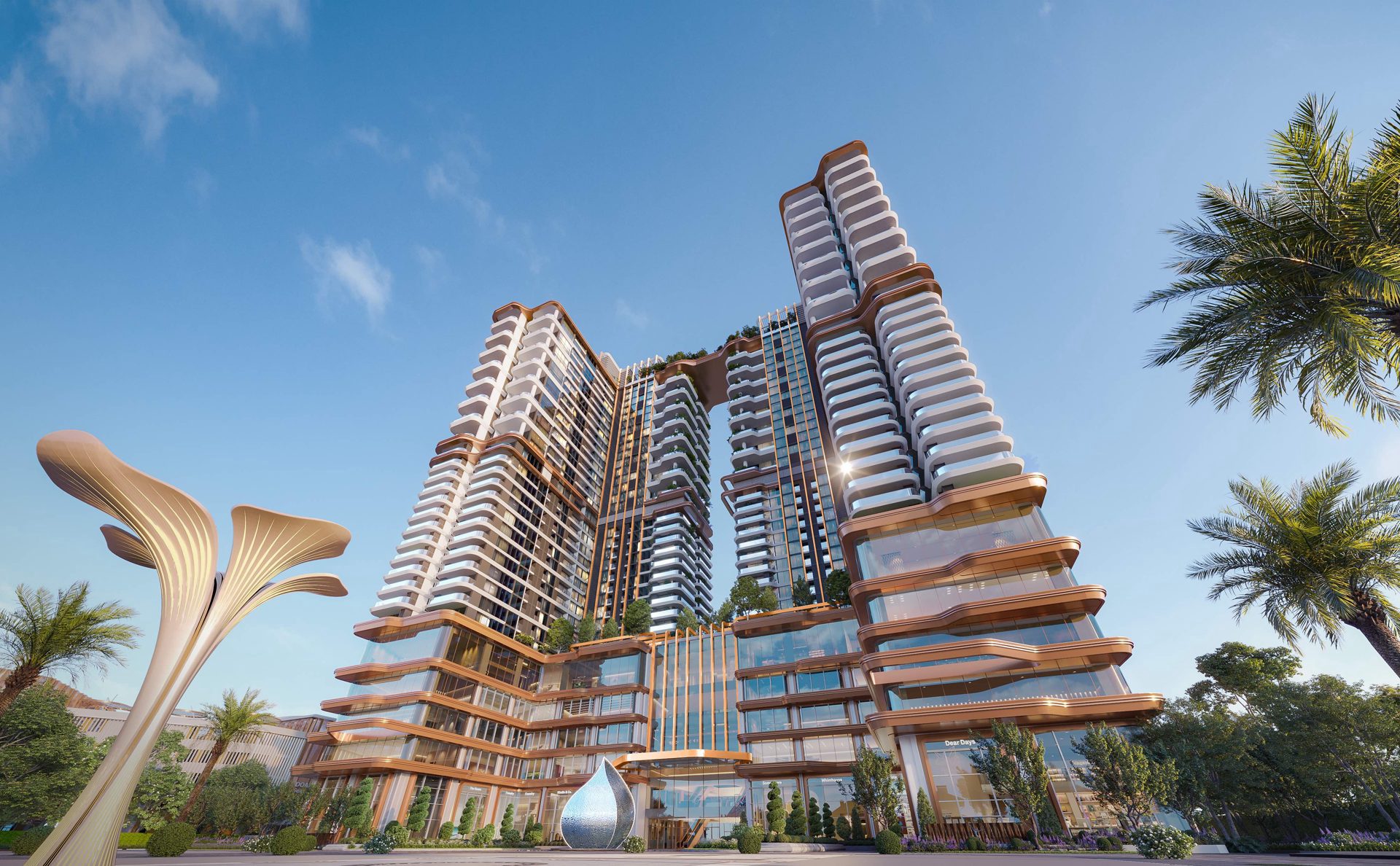
Foreign citizens and foreign-invested companies fall under special regulations under the Land Law 2024 (Land Law No. 31/2024/QH15) and the Housing Law (Housing Law No. 27/2023/QH15):
- Buying residential real estate on the primary and secondary markets: Foreigners do not acquire private ownership of the land beneath a residential complex, but receive a proportional land use right for the land plot under the building for the validity period of their Pink Book (50 years with a guaranteed right to a one-time extension for another 50 years).
- Villas and Townhouses: A foreigner can purchase an individual house exclusively within an approved landed project from a developer (within the 10% foreign quota). Purchasing a private standalone house on an individual land plot "on the street" directly from a local resident is not permitted.
- Strict usage controls: It is forbidden to use residential properties for industrial or storage facilities, or commercial land for permanent residential registration.
Obligations of Land Use Right Holders
Holding an LUR imposes a set of clear legal obligations on the owner and developer:
- Compliance with zoning: Utilizing the property strictly according to its designated purpose.
- Financial obligations: Timely payment of land taxes, rental fees to the State, and government fees upon title transfer.
- Monitoring legislation: Tracking updates to city/provincial master plans and urban planning regulations.
Summary
The Land Use Rights (LUR) system makes the Vietnamese real estate market transparent and structured. For a foreign investor, the key benchmark remains the designated land purpose of the project: residential land (Đất ở) provides the opportunity to secure full ownership under a Pink Book for 50+50 years, while commercial land is suited for operational leasehold models and hospitality businesses.
Need Assistance in Evaluating a Project?
Investing in Vietnam real estate requires a structured approach, understanding of the local market architecture, and legal nuances. The VINPROP team helps investors make informed decisions based on independent market analysis, up-to-date analytics, and in-depth knowledge of the regulatory framework.
How we assist our clients:
- Investment consulting and market analysis: we select projects in the primary and secondary markets, align them with relevant investment strategies, calculate potential yields, taxes, and expenses, and help build holding and exit strategies.
- Comprehensive legal due diligence and support: we conduct independent verifications of property legal status, land use categories, developer permit documentation, and remaining foreign quota balances. We coordinate legal transaction support: document preparation, notarization, and interaction with government authorities.
FAQ
Can a foreigner privately own land in Vietnam?
No. In Vietnam, all land is owned by the State. Foreign nationals cannot purchase land plots into private ownership. When buying residential property in approved projects, a foreigner receives ownership rights to the property (under a Pink Book), which includes a proportional share of Land Use Rights (LUR) for the land plot beneath the residential complex for the duration of the contract.
What are LUR and Pink Book?
LUR (Land Use Rights) is the state-granted right to use a land plot. The Pink Book (Sổ hồng) is the official title document (Certificate) confirming both your Land Use Rights and your ownership of the building or apartment constructed on that land plot.
What is the difference between long-term (perpetual) land use and fixed-term land use?
Long-term/perpetual use (Lâu dài) is granted only to Vietnamese citizens for residential land. Fixed-term use (Có thời hạn) is typically granted for 50 years (with extension rights) and applies to investment projects, commercial land, and residential purchases by foreign citizens.
Can I buy a private landed house directly from a local resident in Vietnam?
No. Foreigners do not have the right to purchase standalone private houses or land plots from individuals on the secondary market. A foreign citizen can only acquire a villa or townhouse within an organized developer project that has an approved foreign quota (up to 10%).