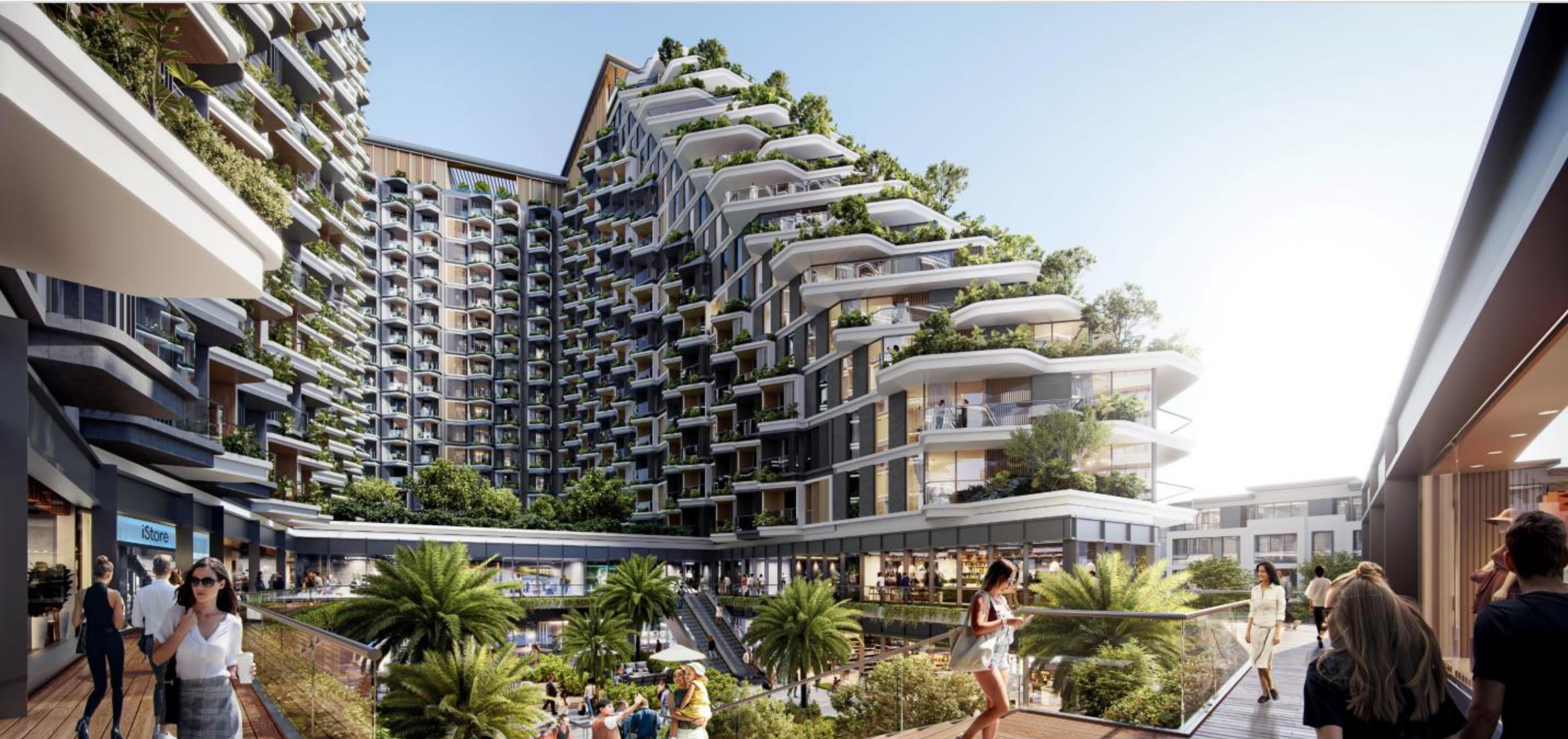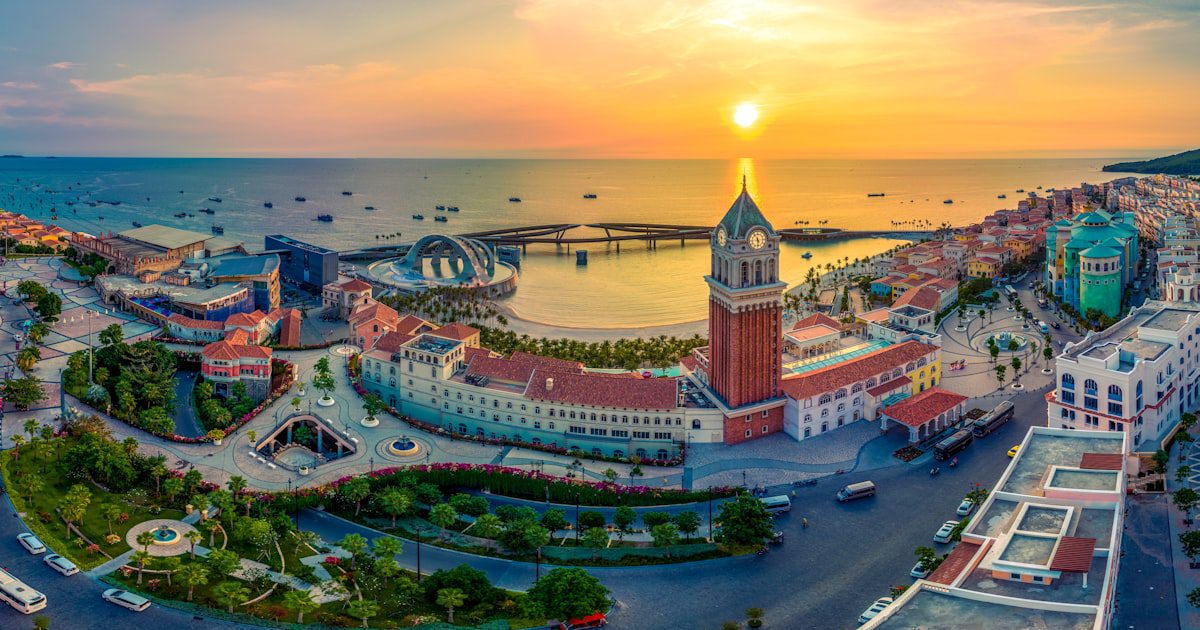
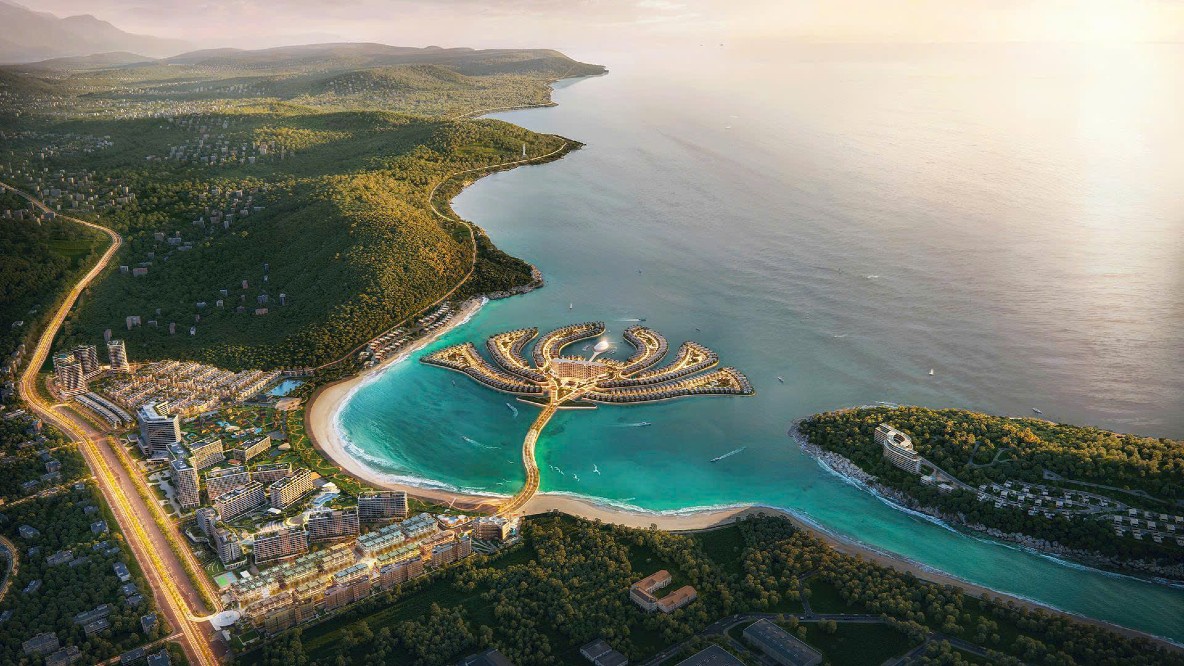
Phu Quoc is Vietnam's largest island, 50 km long in the Gulf of Thailand, with an international airport and visa-free entry for tourists. The market is entirely a resort one: there is very little housing "to live in", and a great deal of villas and apartments run by hotel operators.
Since 1 July 2025 the island has held the status of a special zone (đặc khu) within An Giang province, which absorbed the former Kien Giang. For the next two years the island lives by its preparations for the APEC 2027 summit.
The island is several unconnected markets. The south — An Thoi and around — has the cable car, the theme parks, the densest tourist infrastructure and most of the branded projects. The centre and west is Duong Dong, the only real town on the island, where everyday life happens. The north is national park plus large resort sites developed in isolated patches. Distances are real: south to north is an hour's drive.
The island's first light rail line is being built for the summit: around 18 km and six stations from the airport to the convention centre and the south, at nearly 9 trillion dong, with launch targeted for the second quarter of 2027. The airport is being expanded in parallel, along with a reservoir and resettlement areas. This is the most concentrated infrastructure cycle in the island's history — and also the main risk, because prices have already priced much of it in.
Nearly all resort supply on the island comes under hotel management, where income depends on the operator agreement and the ownership format differs from an ordinary apartment. Seasonality is sharper than on the mainland: the south-west monsoon runs from July to September.
How ownership formats work, and what a foreigner receives, is explained in our reference on property ownership rights.