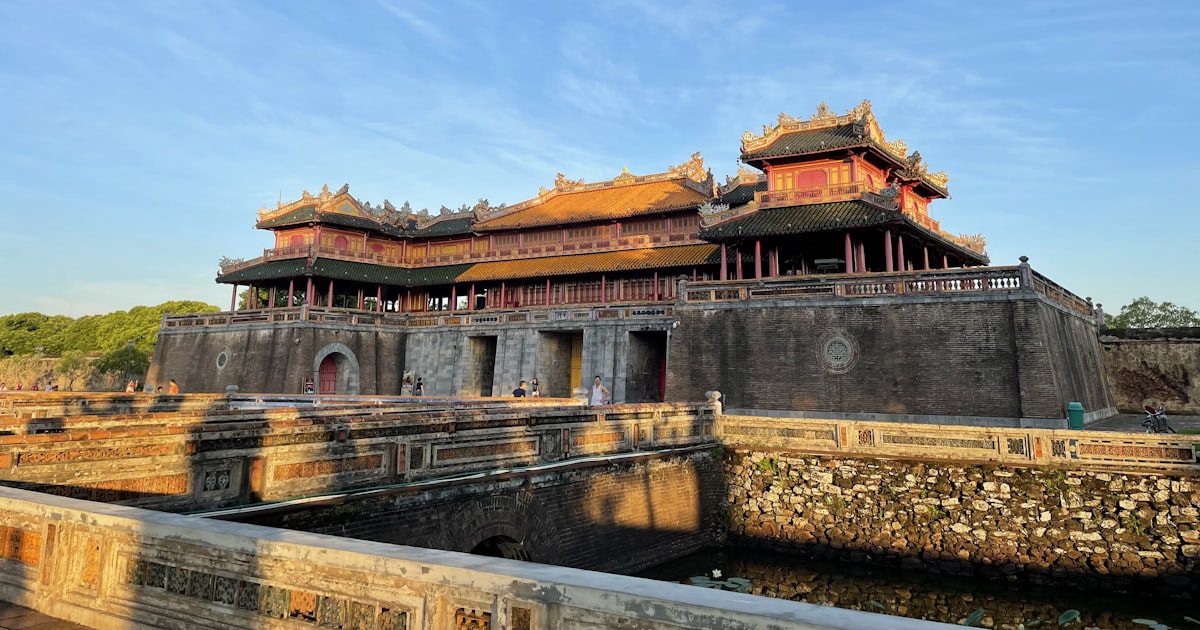

Hue is the former imperial capital and a UNESCO World Heritage site: the citadel, the Nguyen dynasty tombs, the Perfume River. Since 1 January 2025 it has been a centrally-run city — promoted from Thua Thien Hue province to a unit ranking alongside Hanoi and Da Nang.
The housing market here is small, and that is its defining feature. Hue lives on tourism, universities and medicine rather than corporate relocations; new high-rise projects are few and appear rarely.
The Perfume River splits the city: the north bank holds the citadel and heritage fabric under strict height limits, the south bank is the modern centre where the little contemporary housing available to buyers is built. Hue appears in our catalogue as one or two projects at a time, which honestly reflects the size of the market.
Tourist flow is steady but short: people come to Hue for a day or two on the way between Da Nang and Phong Nha. Phu Bai airport, 15 km from the centre, takes international flights, and its new terminal is sized for around 5 million passengers a year. Da Nang is two hours away by road through the Hai Van tunnel, and many treat Hue as its quieter, cheaper alternative with the same connectivity.
The main risk in Hue is not price but liquidity: buyers are few, the secondary market barely functions, and exiting an asset can take years. If the goal is rental income or quick revaluation, neighbouring Da Nang serves far better. Hue makes sense when you are buying for yourself.
What to check before a transaction is covered in the guide for foreign buyers.